

Optimizing the Potential of the Biak Karon Indigenous Community
Many are still unaware of the crucial role that indigenous communities play in maintaining ecosystem balance and preserving marine resources. This is why the Nature Conservation Foundation of Indonesia (YKAN) supports the development of areas managed by indigenous legal systems. YKAN’s support for the development of indigenous legal communities is, in itself, an endorsement of the government’s ongoing efforts to empower these communities, which are integral to the implementation of sustainable fisheries practices.
The Government Continues to Promote Legal Empowerment of Indigenous Communities
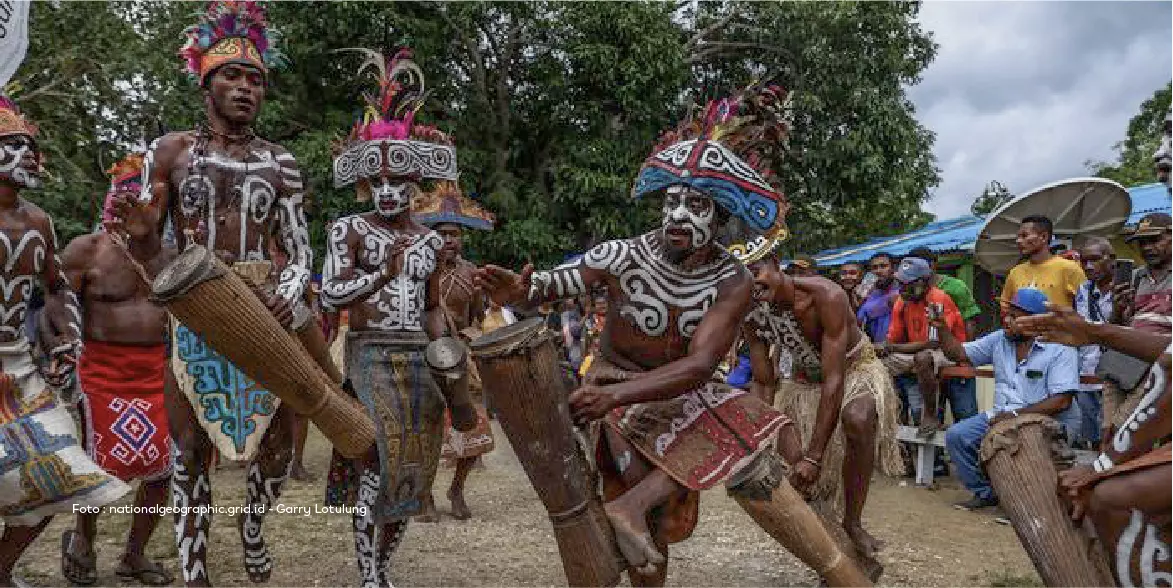
Since 2016, the government, through the Ministry of Marine Affairs and Fisheries (KKP), has facilitated the recognition and protection of 27 indigenous legal community communities, reinforced by 20 Regent/Mayor Regulations. YKAN believes that with a sound management framework, areas managed by indigenous communities can provide greater economic and ecological benefits. It is essential to provide support and guidance to blend traditional and modern knowledge, enabling indigenous communities to optimize their potential, whether in terms of marine tourism, maritime culture, aquaculture, or restoration.
One form of full government support to maximize the potential of indigenous communities is reflected in Tambrauw Regent Regulation No. 12 of 2019 concerning the Recognition and Protection of the Indigenous Legal Community of Werur in the Bikar District, which falls under the Indigenous Legal-Based Coastal and Marine Resource Management of Tambrauw Regency. This area is home to the Biak Karon indigenous community. YKAN collaborates with various partners to organize the Munara Beba Biyak Karon Indigenous Festival in Wenur Raya, Tambrauw Regency, South West Papua Province from March 22-25.
YKAN supports the government in making indigenous communities a vital pillar in preserving ecosystem sustainability by providing guidance to help them tap into their potential. The recent indigenous festival was not just filled with various cultural competitions, crafts, culinary delights, local products, and traditional arts to entertain, but it also aimed to strengthen the Biak Karon indigenous community, reviving their traditional wisdom.
The Biak Karon tribe’s festival included a variety of cultural contests, crafts, cuisine, unique products, and other traditional arts for entertainment, but it also marked the first time that all clans of the Biak Karon tribe gathered to support the success of the festival and conduct the sasi ceremony. According to local religious figures, the sasi tradition is a significant activity that the Biak Karon community had long abandoned and was no longer practiced by the local people. However, the sasi tradition plays a crucial role in coastal communities in maintaining ecosystem balance.
The Biak Karon Indigenous Community Sets a Positive Example in Fisheries Sustainability
Yunus Rumansara, Chairman of the Biak Karon Indigenous Council, joyfully exclaimed, “Utilizing natural resources wisely is the wisdom passed down from our ancestors. Through the festival and the revival of the sasi tradition, we strive to care for the environment, both now and for the future.” In an effort to demonstrate the commitment of the Biak Karon community to fisheries sustainability, this traditional festival concluded with a sasisen closing ceremony. This commitment serves as a positive example of sustainable fisheries for other coastal indigenous communities to follow.
The support provided by YKAN to optimize the potential of indigenous communities is praiseworthy and should be emulated by others. Aruna has also been actively involved in providing assistance and education to coastal communities, helping them improve the quality of their production and catch results in the fishing industry. With enhanced production quality, seafood suppliers and other stakeholders are willing to offer better prices to fishermen.
The Vital Role of Extension Workers in Sustainable Fisheries Development
The Indonesian government has embraced the concept of the blue economy and aspires to position Indonesia as a global maritime hub. Both endeavors inherently demand a strong foundation in the maritime and fisheries sectors. As these sectors grow in importance, a comprehensive and capable strategy for sustainable fisheries development is essential to solidify Indonesia’s maritime domain as a resilient pillar of progress.
In the pursuit of sustainable fisheries development, the availability and competence of extension workers play a crucial role in realizing the success of priority programs outlined by the government, particularly the Ministry of Maritime Affairs and Fisheries. Extension workers serve as guides and conduits, conveying information about the fishing world from the central government to local regions. Given the pivotal role of fisheries extension personnel, it’s disheartening that field realities reveal an inadequate number of them to meet the demand.
Shortage of Fisheries Extension Personnel across Various Regions
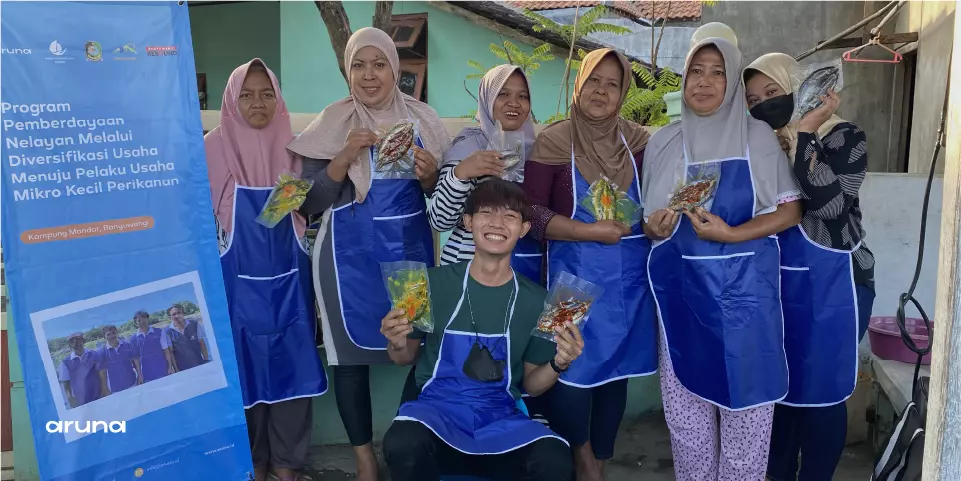
A notable case of this shortage is evident in Empat Lawang Regency, South Sumatra Province. Andi Ramlan S.Pi., the Coordinator of Fisheries Extension for Empat Lawang Regency, disclosed that his working area has only seven individuals comprising the fisheries extension team within the Regency’s Fisheries Department. However, there are ten sub-districts in Empat Lawang, and in the Pendopo Sub-District, ideally, two to three extension workers should be provided due to the more substantial fishing activities compared to other sub-districts.
“Ideally, there should be one fisheries extension worker per sub-district. We have ten sub-districts. However, it also depends on the fishing area. For instance, in the Pendopo Sub-District, ideally, there should be two or three fisheries extension workers,” Andi Ramlan stated. Considering their critical responsibilities in coordinating fisheries activities at the Fishery Extension Administrative Unit (satminkal) and the Provincial Maritime and Fisheries Office, South Sumatra, it becomes even more pressing. Additionally, fisheries extension workers are tasked with verification, signing off on fishery extension reports and attendance, and executing other duties delegated by the Marine and Fisheries Human Resources Research and Development Agency (BRSDM KP).
Impact of Fisheries Extension Personnel Shortage on Sustainable Fisheries Development
The issue of human resource shortage within the Ministry of Maritime Affairs and Fisheries must be addressed promptly, especially considering the government’s recent reforms in the maritime and fisheries education system, merging all units into the Ocean Institute of Indonesia (OII). If the number of fisheries extension personnel falls short of the ideal amount, the implementation of sustainable fisheries development could be delayed due to ineffective dissemination of information from the central level to local regions, inevitably hindering the progress of the fisheries industry.
Local Heroes and Aruna Hub: Aruna’s Recognition of the Importance of Fisheries Extension Personnel
Aruna, a fisheries-focused company dedicated to improving the lives of fishermen through sustainable fishing practices, is well aware of the significance of mentors and extension workers in overseeing fishing activities. Through the active role of the marine and fisheries ecosystem of Aruna Hub and the Local Heroes in each region, Aruna has successfully transferred knowledge, information, and technology to coastal communities. Not only fishermen but also non-fishing communities along the coast have experienced positive impacts.
Aruna has educated coastal residents, particularly women, on producing derivative products from leftover catches or aquaculture activities. These products are then aided in marketing to reach potential consumers such as restaurants, hotels, and seafood suppliers across various regions and even internationally. Hence, the reality of numerous coastal areas in Indonesia lacking fisheries extension personnel is concerning. It is hoped that the government collaborates with academia and the private sector to swiftly address this human resource shortage issue.
Sustainable Fisheries Partnership as the Solution for Implementing Blue Economy
The Indonesian government, through the Ministry of Marine Affairs and Fisheries (KKP), has announced the implementation of the blue economy, where the government is committed to restoring the balance of marine habitats and accelerating the marine economy. KKP has even set 5 priority programs that will continue to be implemented to support the blue economy. To successfully carry out these 5 priority programs, KKP sees sustainable fisheries partnership as the most appropriate solution to increase the participation of all stakeholders in supporting the government to achieve its goals.
1. KKP Establishes Sustainable Fisheries Partnership with the World Bank
Of the 5 programs that KKP has identified as priorities to support the implementation of the blue economy concept in Indonesia, they include expanding marine conservation areas, measuring fish catches based on quotas, managing marine, coastal, and inland cultivation, sustainable coastal and small island management, and managing plastic waste in the sea. To successfully carry out the first priority program of expanding marine conservation areas, KKP has even initiated the Insan Terang – Lautra program, a conservation area development program that is funded by the World Bank.
2. Insan Terang – Lautra strengthens conservation management while increasing the fisheries industry
KKP continues to improve infrastructure to support the conservation expansion program through the Insan Terang – Lautra Coral Reef Infrastructure – Prosperous Ocean program. By emphasising sustainable fisheries partnerships, this infrastructure development will be carried out by collaborating with the World Bank. The Insan Terang – Lautra program, which is planned to begin operating effectively in mid-2023, aims to improve the welfare of coastal communities by managing conservation areas that are considered to have marine and fisheries resources.
In other words, the Insan Terang – Lautra program is expected to not only expand and strengthen conservation area management but also provide a livelihood for coastal communities by implementing sustainable aspects in fisheries industry activities.
3. Insan Terang – Lautra Strengthens Conservation Management and Boosts Fisheries Industry
Through this, improving coral reef management and effective conservation management that supports ecological and economic progress can be achieved together. Sustainable fisheries partnerships can also create synergies between the government and stakeholders, especially fishery companies. From the perspective of monitoring and evaluating programs, the government and collaborating parties together with the community can monitor to ensure that KKP’s priority programs run smoothly.
This is similar to what Aruna implements in building synergy with coastal communities and fishermen. Together with Aruna Hub, each party including internal Aruna, Local Heroes, and fishermen transfer knowledge and monitor each other to ensure that sustainable fishing activities can run well and continue to provide benefits.
Pelagic Fish and Demersal Fish, the Primadonna of Sea Fisheries Supply
Until now, consumers of fishery products have only distinguished fish based on their water habitat, namely freshwater fish, brackish water fish, or saltwater fish. If asked about pelagic or demersal fish, many people are still unfamiliar with the classification of these types. However, the largest export market for fisheries supply comes from fish that originate from pelagic and demersal species.
Unlike large players in the fisheries industry, they are certainly very familiar with the characteristics and differences between pelagic and demersal fish. The classification of pelagic and demersal fish is based on the type of marine habitat.
1. Definition of Pelagic Fish and Demersal Fish
Pelagic fish are fish that live on the surface of the water and live in groups.
Demersal fish are fish that live on the bottom of the muddy, sandy and rocky sea floor.
The classification of pelagic fish is further based on their size, namely small and large pelagic fish. Unlike pelagic fish, Syahrizal Siregar, Business Operations Officer of Aruna, stated, “The classification of demersal fish is distinguished by more complex characteristics based on their density and swimming ability, namely shape and bentopelagic. As an integrated fisheries commerce in the fisheries sector, Aruna also wants pelagic and demersal fish species to be familiar to the general public.”
2. Differences between Pelagic Fish and Demersal Fish
- Individual vs Group
The most distinguishing characteristic between these two types of fish is how they live in their habitat, as pelagic fish are accustomed to living in groups while the other type is accustomed to living individually. - Oil content in the body
Demersal fish only have an oil content of 1%-4% of their total body weight. On the other hand, oil can be found in up to 30% of the body of pelagic fish, making the flesh of demersal fish included in the category of white fish.
3. Primadona Fisheries Supply Commodities from Pelagic and Demersal Fish
Each pelagic and demersal fish in Indonesian waters is a primadona commodity in the fisheries sector, both for domestic and international markets. Some examples include:
- Pelagic fish: skipjack, tuna, mackerel, Indian mackerel, anchovy
- Demersal fish: grouper, snapper, milkfish, pomfret, red snapper
The general public is certainly familiar with and consider the above fish as food. Syahrizal said, “Not only in the Aruna ecosystem, but in general, from each of these two types of marine fish, the primadona and widely available in various seafood suppliers are skipjack, which is a pelagic fish, and grouper from demersal fish.”
4. Despite Having Economic Value, Fish Sustainability Must be Maintained
Both pelagic and demersal fish have been commercially caught for a long time to meet fisheries supply needs and serve as the main dish in restaurants and households. Therefore, the habitats of both types of fish must be monitored to prevent overfishing, which can cause environmental damage and drastically reduce their availability.
Aruna, as a fisheries company that prioritizes the application of sustainable fisheries concepts, continues to work with fishing communities to maintain the availability of fish and their habitats, and to use fishing methods that do not harm the environment. “With the increasing number of Aruna Hubs spread across various coastal areas in Indonesia, the application of sustainable fishing methods has been proven to improve the livelihoods of fishermen in terms of understanding and economics,” said Syahrizal when asked about one of the steps Aruna takes to implement sustainable fisheries.
In addition to successfully opening up wider market access for local fishing communities to meet their fisheries supply needs, many fisheries companies through their ecosystems also make many efforts to ensure that the economy and ecology can work in synergy. Aruna is an example of a fisheries company that can encourage its member fishermen to actively participate in preserving the aquatic habitat.
Making Indonesia the World’s Maritime Axis in 2045
The Republic of Indonesia, with its vast archipelagic territory and vast marine resources, has set its vision to become the world’s maritime axis in 2045. However, there are many obstacles to overcome in various sectors that must be addressed to achieve this grand goal. One way to facilitate Indonesia’s progress is to make Indonesia the center of sustainable fisheries in the world.
Indonesia is one of the world’s important ports
The world’s maritime sector is not just about fisheries and marine affairs but also involves sea trade routes that have been dominated by neighboring countries. Vice President K.H Ma’ruf Amin stated that 90% of global trade transported through sea routes, 40% of which pass through the Malacca Strait, especially Indonesian waters. From the global sea trade route aspect, Indonesia already has a fairly important position. Even thanks to various improvements in dwelling time at Indonesian ports by the end of 2022, it will only take 2-2.5 days, far shorter than in 2016, which could take up to one week.
On the maritime infrastructure side, the Indonesian government has made many improvements to realize its vision of becoming the world’s maritime axis, including the marine resources handled by the Ministry of Maritime Affairs and Fisheries (KKP) and the Coordinating Minister for Maritime Affairs and Investment (Menko Marves). The real results of the synergy between these two ministries to strengthen Indonesia’s maritime pillar are becoming increasingly visible.
Making Indonesia the World’s Maritime Axis and the Center of Sustainable Fisheries
With the various recorded advancements, is Indonesia already worthy of the title of maritime axis or the center of sustainable fisheries in the world? The answer is still not yet, but it is getting closer. The government, through the KKP, has even created five priority programs that have been running with the aim of advancing the economy as well as the ecology of the maritime sector.
The Food and Agriculture Organization (FAO) through the report entitled “The State of World Fisheries and Aquaculture 2022” released data that China is the country with the highest marine fish production in the world and the main seafood supplier with a yield of 11.77 million tons, while Indonesia’s total production is 6.4 million tons. Meanwhile, the big problem that still hinders the fisheries industry in Indonesia is illegal fishing. To reduce illegal fishing, the KKP has even issued the Measured Fish Capture (PIT) policy.
Implementation of the PIT Program as a Solution to 2 Problems at Once
The PIT policy has also been implemented by the Chinese government to regulate target vessel limits, fishing gear used, and fishing permits, but the Chinese government encourages fishermen to catch as many fish as possible (overfishing). This can be used as a weapon by Indonesia by applying sustainability awareness and continuously improving production capacity so that Indonesian fish will be more valued because they are obtained or cultured while balancing the ecology in line with the blue economy concept.
Indonesia’s potential marine resources are still very large because China, with an area of 3.5 million km2 of sea, can produce fish with a total of 11.77 tons. Meanwhile, Indonesia, with an area twice the size of China’s sea (6.3 million km2), can only produce 6.4 million tons. This weakness can actually be turned into strength so that with the KIP policy taken by the government while running four other priority programs, it can increase fishery production through other channels, namely cultivation. The Indonesian government’s step to make PIT a solution to reduce illegal fishing while increasing fishery cultivation efforts is a brilliant effort.
Support from all stakeholders in the fisheries industry is needed.
What needs to be noted by fisheries practitioners from upstream to downstream, including Aruna itself as a fisheries company, is to continue to support Indonesia to strengthen its pillars in order to become the world’s maritime axis and center of sustainable fisheries in the world. Especially with the presence of Aruna Hub which has helped implement sustainable fisheries and increase fishermen’s income, Aruna will continue to support the government to advance the maritime world, especially the fisheries sector in Indonesia.
Embodying the Sustainable Fisheries Case Study from the Coastal Communities
Coastal communities are indeed the spearheads of the implementation of sustainable fisheries. It is from the coastal communities that we can see the success of the implementation of sustainability concepts and turn them into sustainable fisheries case studies.
We have to be very aware that sustainability concepts are not only important for the fisheries industry, but also for natural preservation. Communities living on the coast will often find protected marine animals that need to be treated and may not be traded or consumed. Therefore, they must have sufficient knowledge.
Viral Video Deserves Deeper Study for Sustainable Fisheries Case Study
Recently, a video showing the moment when they caught fish in the sea can be used as a sustainable fisheries case study. In the video uploaded on social media, it can be seen that they found turtles that got into their trawl. The fishers understood that all types of sea turtles are included in the category of protected animals.
Because of that they then got the turtles trapped out of the nets. Even in the video, you can see the fishers were helping clean the turtle shells from parasitic animal patches. From the explanation of the fishers, it was said that the largest turtle was estimated to be 8 years old. After cleaning the shells, the fishers released the turtle to the sea.
The Fisher’s Final Message
“Let’s take care of marine life, guys!” one of the fishers at the end of the video said. The video has been widely shared by various electronic media. Many people who watched the video expressed their excitement for the attitude of the fishers. It’s commonly known that turtles moreover have economic value in illegal trade, so many people tend not to do what they should when they find protected animals.
From the actions taken by the fishers in the video, it can be seen how they were not tempted by the potential for the great profits that could be obtained. Instead, they released the turtle to the open sea. This is then turned into a sustainable fisheries case study.
Fishers and coastal communities who have been equipped with sustainable fisheries concepts and implementations will play an active role in protecting animals in the ocean, given that they already have awareness that the balance of nature must be maintained. The community is no longer tempted to get involved in illegal activities that can damage nature both in the short and long term.
The active role of the community must be increased
With the active role of all coastal communities in protecting and monitoring the environment, surely there will be no more parties secretly selling protected animals to unscrupulous seafood suppliers. In addition, coastal communities who already have adequate knowledge can also help prevent the extinction of protected animals.
The task of educating the public about the importance of implementing sustainability concepts in the fisheries sector is a task that must be carried out together. Aruna, as one of the actors in the industry, continues to assist coastal communities, not only to improve their standard of living but to also provide provision of knowledge in maintaining the balance of nature.
Laguna Wayag is a Suitable Candidate for Sustainable Fisheries Case Study
People who are fond of traveling may already be familiar with Raja Ampat, especially the Wayag area. Moreover, lovers of the beauty of the sea and diving enthusiasts must have included Wayag, which is located in West Papua Province, in their list of favorite diving spots. What many people still don’t know is that in this exotic lagoon area, there is a conservation area with a technological approach that deserves to be explored deeper as a case study of sustainable fisheries.
The conservation area is the first ever coral manta ray growth habitat in the world located in the West Waigeo National Conservation Area, where the Wayag Lagoon which has become a worldwide tourist destination is included in the conservation area. Managing an area with 2 major activities in the form of tourism and conservation is certainly not easy. However, apparently this has been successfully carried out by the government through the management of the Raja Ampat Conservation Area.
Conservation in Waya as a Sustainable Fisheries Case Study that Has Received International Appreciation
Not long ago, in an event held in the city of Lisbon, Portugal, the Marine Conservation Institute (MCI) held the 2nd United Nations Ocean Conservation. On this occasion, the Raja Ampat Conservation Area was awarded a gold level Blue Park Award. The honor was awarded because MCI saw that the management of coral manta ray conservation in Raja Ampat was successful and effective, even though the conservation area shares the same area as the tourist area.
The appreciation obtained by the management of this conservation area is the proof of their hard work. The government through the Ministry of Maritime Affairs and Fisheries is indeed optimizing its human resources, along with the use of appropriate technology in managing the area. Several technological implementations that have made conservation management in Wayag worthy of emulation and made into sustainable fisheries case studies that have been carried out since 2013 include:
- Photo ID & Drone method
- Satellite Locator Method
- Passive Acoustic Tracking Method
Using these three methods, it was observed that the juveniles of coral manta rays were detected almost continuously in the Wayag Lagoon area without leaving the area for more than 4 months.
The Support of All Elements of Society Determines the Success of Conservation Management
The results of observations and findings summarized by a team consisting of experts and researchers regarding coral manta rays have been collected in an open-access scientific journal on Frontiers in Marine Science. Departing from this scientific journal, the National Marine Protected Areas Agency (BKKPN) formulated a better management strategy to improve the protection of the manta ray enlargement areas and ensure the survival of the juvenile coral manta rays that live in the Wayag Lagoon.
The success of the management of the Raja Ampat Islands Marine Conservation Area in elaborating the right utilization of technology as well as natural resources and human resources is a valuable lesson in itself. This is due to the fact that the Indonesian region has 201 conservation areas spread across various regions. Cross-sectoral synergy between the government, academics and other actors involved in the water sector is really needed.
How the Ministry of Maritime Affairs and Fisheries strives for the fisheries industry to develop while continuing to strive for the implementation of sustainable fisheries must indeed involve all levels of society, bearing in mind that economic progress without being accompanied by maintained natural conditions will backfire in the future.
We all have to play an active role so that there are no more actions that could damage nature or there are cases where protected animals are actually sold by unscrupulous seafood suppliers just for profit. Therefore, Aruna built Aruna Hub, a supply point where Aruna also empowers coastal communities through several activities, such as seafood transactions, warehousing, and community gatherings throughout Indonesia. As one of the elements in the marine ecosystem, Aruna will continue to support the government’s efforts so that the wider community can implement sustainability insights. With the application of sustainable insights in various aspects, economic and ecological progress can be achieved simultaneously.
Circular Economy as One Model of a Sustainable Fisheries Practice
Noticing the ever-growing impacts of industrial activities towards the environment, now, countries of the world are becoming more conscious of greener economic activities. What “greener” means is reducing negative impacts of economic activities towards the environment. Building up from the growing awareness of the leaders of the world, the concept of circular economy has now become a popular phrase among the top minds of the world. The commitment to apply Circular Economy also includes the marine and fisheries sector—in fact, these are one model of sustainable fisheries practice that deserves everyone’s support.
The concept of Circular Economy is one of the newest economic models that focuses on the 3Rs: Reducing, Reusing, and Recycling, as well as reducing the use of primary energy sources and waste production. The application of this concept is considered as the best strategy to recover national economic conditions after the pandemic.
Kukuh S. Achmad, theChairman of the National Standardization Agency states that all of the countries of the world have started transforming their economy to a greener approach in order to reduce the impact of economic activities towards the environment, and support long-term growth—one method of which is Circular Economy. This idea is supported by the Coordinating Minister for Economic Affairs, Airlangga Hartarto, which says that Circular Economy is actually one of the prioritized developments in the National Medium Term Development Plan of 2020-2024.
The Application of Circular Economy Also As One Model of a Sustainable Fisheries Practice
Circular Economy is in line with the application of Sustainable Fisheries of the Blue Economy. The concept of Blue Economy was first introduced by Dr. Gunter Pauli, which places the ocean as the center of economic growth and welfare improvement, as well as environment preservation. So, we can come to the conclusion that Circular Economy and Blue Economy are strongly tied to each other.
The Indonesian government, in adopting Circular Economy in its developmental vision and strategy, devised 5 priority sectors: inventorization and rehabilitation of coastal and marine ecosystems, recovery of sustainable lands, development of Green Economy, development of sustainable energy production, and management of integrated waste management. As such, the involvement of everyone in the fisheries industry in applying sustainable knowledge will help in executing government programs to apply Circular Economy as well as Blue Economy—be it for fishers, industry players, seafood suppliers, or even the society, as consumers.
Sustainability: the Key to Generating Big Impacts for the Economy and Ecology
All of the government policies that are applied are closely related to the economic impact that are caused—similar to how the Circular Economy operates. National research teams have calculated positive impacts of the success of the implementation of Circular Economy, which is quite sizable.
“In several studies and scenarios of the implementation of Circular Economy, if we start with the 5 priority sectors, would have its results in 2030 where Circular Economy would increase the GDP up to IDR 638 trillion, create new jobs, reduce CO2 emissions up to 126 million tons, and reduce water use up to 6,3 billion cubic meters,” said Airlangga.
Penerapan wawasan keberlanjutan sudah sejak awal diterapkan oleh startup Aruna bersama ekosistem pendukung perikanan yang bernama Aruna Hub. Karena Aruna melihat menjalankan konsep keberlangsungan menjadi one model of a sustainable fisheries practice yang komprehensif dan akan menyelesaikan banyak masalah secara sekaligus. Terbukti ada banyak manfaat yang telah dirasakan oleh masyarakat, di antaranya:
The implementation of conscious sustainability methods have been done by Aruna with its own ecosystem created to support the growth of fisheries called the Aruna Hub. Aruna has observed sustainability as one model of a sustainable fisheries practice that is very comprehensive and important in solving many problems at one. Some of the many benefits that are now felt by everyone include:
- Increased knowledge among fishers and coastal community members,
- Better access to wider markets,
- Better economy standards,
- Increased employment rate,
- Increase in the effective use of technology in appropriate fields,
- Better access to fresh seafood products for all members of society.
Circular Economy, Blue Economy, and Sustainability are the 3 keys to create massive impacts in the fisheries sector should they be implemented properly and comprehensively, upstream to downstream. The success of governmental involvement and support from all stakeholders and society will put Indonesia as a model country for the one model of a sustainable fisheries practice that can successfully benefit cross-sector implementations.
Learning About Sustainable Fisheries Characteristics from the Bajo Tribe
The knowledge of the existence of Bajo or Bajau people is already widespread among Indonesians, especially to those who often travel to coastal areas to enjoy their beauty as well as the ocean’s. The Bajau are a nomaden folk, used to traversing wide seas and oceans, and carries many traditions that are filled with sustainable fisheries characteristics.
Ya, lagi-lagi kita disadarkan untuk tidak melulu mencari belajar dan mengadaptasi konsep sustainable fisheries dari sumber yang terlalu jauh. Karena jika ditelisik lebih dalam, ada banyak kearifan lokal masyarakat yang layak untuk dijadikan bahan percontohan untuk dapat dikembangkan. Kebudayaan dari masyarakat bahari suku bajo ini salah satunya.
Yet again, we are faced with quite the rude awakening of the fact that we do not need to look far to find methods of sustainable fisheries. Looking closely, there is a lot of local wisdom that can be replicated and developed for sustainable methods of fishing. One of them being the Bajau people’s ways.
The Bajo Tribe is Rich in Sustainable Fisheries Characteristics
As their main source of livelihoods, the Bajau people believe that there are norms and values that need to be adhered to when fishing in the sea. While it is unique, the Bajau way actually originates from their fear of Mbo Madilau, the ruler of the ocean in Bajau myth.
Tubba dikatutuang, the most interesting sustainable fisheries characteristics of the Bajo tribe
This Bajau phrase translates directly to “Beloved Coral Reefs”. They are areas of conservation that are considered sacred to locals, so that no fishing is allowed in the area. Thanks to this tradition, coral reefs and fish in the area of Tubba Dikatutuang are preserved very well.
Parika as an institutional system and catch sharing
A man of the tribe would serve as a “Parika” and is tasked to divide the fishing area amongst everyone. The person chosen must be mature and shows good leadership skills. In a boat, there would be several people, so the sharing system is decided to be as follows:
- parika sekaligus si pemilik jaring penangkap ikan mendapat 2 bagian
- sehe yang membantu nangkap ikan (biasanya terdiri dari 2 orang) masing-masing 1 bagian
- panuba yang membantu menggiring ikan tidak mendapat bagian, tetapi berhak memiliki hasil ikan yang dia panah sendiri dari area tangkapan
- The Parika, which is also the owner of fishing nets, gets 2 part of the share
- Sehe, which directly assists the fishing process (usually 2 people), each gets 1 part of the share,
- Panuba, who helps herd the fish, does not get any fish, but are entitled to any which he catches in the area of fishing.
Karang Tapotong (Karang Pakitta)
The Bajau revere the sea greatly, so they will always do a ritual before any sea-related activities, including fishing. Fishers will dip their swimming goggles, as well as wash their face with seawater before they start to fish. They will also tell the sea that they will come to the waters as a friend, not an enemy.
Order of sanctions for violations
There are punishments and sanctions given to those who violate the laws and norms. When put in order, the first punishment comes in the form of warning, the second would be prohibition, and the third being monetary fines.
Negara kita yang terdiri dari beraneka ragam suku dengan warisan budayanya masing-masing, Di dalamnya tentu terdapat banyak pengetahuan yang sudah terbentuk secara turun-temurun. Aruna sangat menyadari akan hal ini, sehingga di setiap lokasi Aruna Hub didirikan, maka tugas yang pertama kali harus dilakukan adalah mempelajari budaya dan tradisi dari masyarakat di daerah tersebut.
Our nation is one that consists of various cultures and traditions, each with their own heritage. There are many ways and knowledge that have been passed down from generation to generation. Aruna is aware of this fact, so that when every new Aruna Hub is founded, the first thing to do is to learn the norms and laws of the land.
Aruna’s dream to develop the nation’s fisheries industry has proven to continue to work without the need to break or force local traditions. Just like how we learn the sustainable fisheries characteristics of the Bajau people, by adapting to the local traditions and cultures, it’s no surprise that there would be local tradition that will inspire an improvement to the supply chain of national seafood suppliers.
Mengapa Sustainable Fisheries Adalah Wawasan Wajib Masyarakat Pesisir?
Data dari pemerintah mencatat bahwa sejak tahun 2012, kasus mamalia laut yang terdampar ke daerah pesisir pantai di Indonesia semakin meningkat. Sebenarnya, pemerintah telah menyikapi hal ini dengan mengambil berbagai tindakan. Namun, dari seringnya beredar video viral mengenai kasus hewan terdampar yang tidak tertangani dengan benar, hal ini semakin menunjukkan bahwa wawasan sustainable fisheries adalah hal yang harus semakin disosialisasikan terutama bagi masyarakat pesisir.
Memang perlu untuk melakukan penelitian serta penelusuran untuk mencari tahu apa yang sebenarnya menyebabkan kasus hewan terdampar semakin sering terjadi. Namun, di samping itu, penanganan yang tepat saat terjadi kasus yang terus berulang ini tidaklah kalah penting. Bahkan, sebenarnya pemerintah melalui Kementerian Kelautan dan Perikanan (KKP) telah mengeluarkan berbagai peraturan mengenai hewan langka, termasuk jika terjadi kasus hewan langka terdampar.
Wawasan Sustainable Fisheries adalah Ujung Tombak Penanganan
Memang perlu disadari bahwa tidak semua masyarakat pesisir berprofesi sebagai nelayan, terlebih juga harus diakui bahwa belum semua nelayan memiliki pengetahuan yang memadai seputar peraturan seputar dunia kelautan dan perikanan. Oleh karena itu, semua pihak harus fokus untuk gencar mengedukasi masyarakat mengenai prosedur yang harus dilakukan pada saat ada hewan langka yang terdampar di perairan mereka.
Sementara dalam wawasan sustainable fisheries, sangat dilarang keras untuk menangkap dan mengelola jenis hewan yang masuk dalam kategori langka dan dilindungi pemerintah karena inti dari wawasan keberlanjutan adalah mengupayakan keberlangsungan perairan, termasuk menjaga keseimbangan habitat laut.Itulah mengapa wawasan sustainable fisheries menjadi ujung tombak pemerintah untuk menangani kasus hewan yang terdampar.
Pemerintah Telah Membuat Prosedur Quick Response
Pada kasus satwa langka yang terdampar di perairan, baik yang dalam kondisi hidup maupun mati, adalah penting untuk melibatkan keterlibatan dokter hewan.. Direktur Jenderal Pengelolaan Ruang Laut ketika masih dijabat oleh Dr. TB. Haeru Rahayu, A.Pi., M.Sc mengkonfirmasi bahwa salah satu langkah penting yang harus dilakukan sekarang adalah bagaimana agar dapat mengedukasi, menyosialisasikan,serta menciptakan prosedur first and quick responder yang memang harus melibatkan dokter hewan.
Keterlibatan dokter hewan selaku pihak ahli memang sangat penting, oleh karena itu pemerintah telah menjalin kerjasama dengan Perhimpun dan Dokter Hewan Indonesia (PDHI). Tertuang dalam Keputusan Menteri Kelautan dan Perikanan (Kepmen KP) Nomor 79 Tahun 2018, juga telah dibentuk pokja (kelompok kerja) untuk koordinasi dan pelaksanaan RAN (Rencana Aksi Nasional) konservasi mamalia laut, termasuk di dalamnya membahas mengenai penanganan mamalia terdampar.
Menjaga Keberlangsungan Satwa Menjadi Tugas Bersama
Pemerintah sudah mengeluarkan berbagai sikap dalam menanggapi kasus satwa terdampar, tetapi hal tersebut tidak akan bisa maksimal jika seluruh masyarakat tidak turut berperan aktif. Apalagi, keberlangsungan seluruh satwa juga sangat penting bagi majunya fisheries industry di negara kita. Menyadari hal ini, Aruna pun akan turut serta memberikan dukungan pada pemerintah.
Melalui ekosistem yang terbentuk dalam Aruna Hub, masyarakat pesisir bisa bahu-membahu menjaga kelestarian perairan beserta satwa yang ada di dalamnya. Besar harapan Aruna agar tidak ada lagi terjadi kasus kesalahan penanganan saat ada satwa langka yang terdampar karena wawasan sustainable yang diterapkan oleh Aruna bukan hanya bertujuan meningkatkan taraf hidup, tetapi juga memberikan dampak positif terhadap kehidupan sosial masyarakat pesisir dan keseimbangan lingkungan.