

Wow, Overfishing Reduced Fish by Almost 90%?
Overfishing is a serious threat to the sustainability of fish resources and marine ecosystems. In recent decades, the number of fish caught has exceeded their natural population levels, resulting in a decline in fish stocks worldwide.
In Indonesia, this phenomenon is increasingly worrying. According to the results of the research “Trends in Marine Resources and Fisheries Management in Indonesia in 2022” conducted by the World Research Institute, it was found that more than 50% of the wild fish population in Indonesia experienced overfishing. This not only impacts the current generation, but also future generations.
If not handled properly, it is estimated that by 2050, the food fish population will collapse. This means that future generations will have difficulty getting fish as a food source.
1. Reason Overfishing
Factors that can cause overfishing are:
Use of fishing gear that is not environmentally friendly.
Fishing gear that is not environmentally friendly can catch fish non-selectively, including non-target species (bycatch) and small-sized species.Excessive and out-of-season fishing.
Excessive fishing can result in a drastic decline in fish populations. Meanwhile, fishing outside the season can disrupt the spawning and growth of fish.Unprotected fishing areas.
Unprotected areas are vulnerable to irresponsible fishing practices because there is no control over fishing.
2. Impact Overfishing
Impact overfishing consumption of fish species is very large. If this continues, fish populations could decline by up to 90%. This will result in disruption of the balance of the food chain in the marine ecosystem. Fishermen’s catches will also decrease, so fishermen’s income will decrease.
In the long run, overfishing have an impact on future generations. One impact is the loss of fish protein sources, which has a negative impact on children’s health and nutrition. Fish is an affordable and easy to obtain source of protein, so it is very important for children to grow and develop optimally.
Not only that, overfishing also impacts the marine ecosystem as a whole. Damage to coral reefs due to overfishing can reduce marine biodiversity and loss of habitat for marine species.
3. Aruna’s Efforts to Prevent Overfishing
As a fishing company that cares about the sustainability of marine resources, Aruna plays an active role in preventing overfishing. We use environmentally friendly fishing gear, such as traps, hand lines, longlines, lift nets and gill nets to reduce negative impacts on the marine ecosystem.
Apart from that, Aruna also supports the Measurable Fishing policy initiated by the Ministry of Maritime Affairs and Fisheries (KKP). We try to comply with the rules that have been stated in the Measured Fishing (PIT) policy so that the fish population is maintained.
In order to support small-scale fisheries, we empower local fishermen by providing training and mentoring assistance. This is done to improve the skills and productivity of fishermen, so that fishermen can obtain higher quality catches.
Overfishing is a serious problem that must be addressed immediately. We invite the entire community to play a role by choosing fishery products from companies that implement sustainable fishery practices. In this way, we can protect marine resources for a better future.
Let’s work together to preserve fish resources and marine ecosystems so that future generations can still enjoy delicious and nutritious fish.
With the Maritime Foundation, Aruna Awakened the Learning Spirit of Coastal Children
Aruna was collaborating with the Maritime Foundation on a program to donate books and school supplies to children in coastal areas. Through this program, we successfully reached over 500 coastal children at Aruna’s operational points across the country.
The donation program was implemented regularly as part of Aruna’s commitment to enhancing the literacy of coastal children and preparing them to contribute to a sustainable future for the fishing industry. The goal was to create opportunities for coastal children to have a brighter future.
Improving Literacy of Coastal Children
Access to education and books remains a challenge for coastal children in Indonesia. In Papua, for example, only 36.1% of grade 3 elementary school students have adequate literacy skills. This indicates that there are still many coastal children who need assistance to improve their literacy skills.
Aruna recognized the importance of literacy for coastal children. Therefore, we were dedicated to implementing programs aiming to improve children’s interest in reading. By donating books on general knowledge, religion, and fiction, Aruna hoped to cultivate a fondness for reading among children, so they were encouraged to continue learning and exploring new things.
Currently, Aruna and the Maritime Foundation implemented a donation program of such in Aceh, Lampung, Central Java, East Java, South Kalimantan, East Kalimantan, South Sulawesi, Southeast Sulawesi, North Maluku, and Papua. Aruna planned to continue this program at other Aruna operational points.
Preparing for the Sustainable Future of the Fishing Industry
Our goal was basically to prepare coastal children for a sustainable future in the fishing industry. By providing them with good literacy, we aimed to cultivate capable successors who could advance the fishing industry. With proper education, coastal children could become fishers and professional fisheries business actors with a deep understanding of marine and fisheries concepts, as well as adequate skills. This effort was expected to improve the coastal economy.
Aruna’s Commitment to the Education of Coastal Children
Utari Octavianty, the Co-Founder and Chief Sustainability Officer of Aruna, emphasized the importance of developing good literacy skills to understand the concept of sustainability and its practical aspects. Aruna purposed to support coastal children in enhancing their enthusiasm for learning.
It is crucial to prepare coastal children for future leadership roles in the fishing industry, as they will play a significant role in managing Indonesia’s seas. Octavianty affirmed, “If not coastal children, who will pragmatically manage our seas in the future?”
Optimizing the Potential of the Biak Karon Indigenous Community
Many are still unaware of the crucial role that indigenous communities play in maintaining ecosystem balance and preserving marine resources. This is why the Nature Conservation Foundation of Indonesia (YKAN) supports the development of areas managed by indigenous legal systems. YKAN’s support for the development of indigenous legal communities is, in itself, an endorsement of the government’s ongoing efforts to empower these communities, which are integral to the implementation of sustainable fisheries practices.
The Government Continues to Promote Legal Empowerment of Indigenous Communities
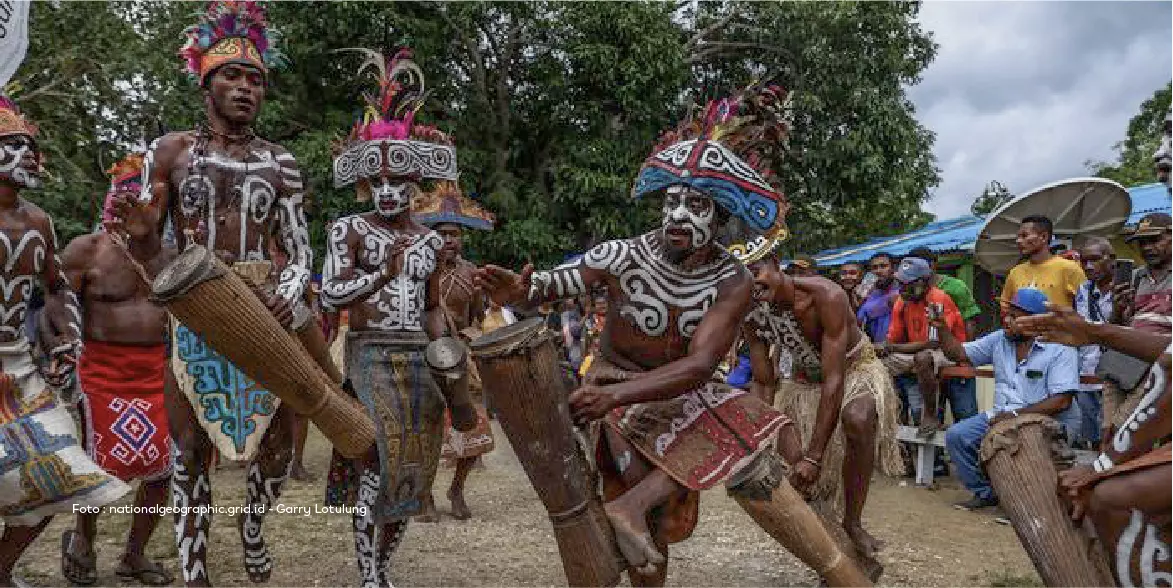
Since 2016, the government, through the Ministry of Marine Affairs and Fisheries (KKP), has facilitated the recognition and protection of 27 indigenous legal community communities, reinforced by 20 Regent/Mayor Regulations. YKAN believes that with a sound management framework, areas managed by indigenous communities can provide greater economic and ecological benefits. It is essential to provide support and guidance to blend traditional and modern knowledge, enabling indigenous communities to optimize their potential, whether in terms of marine tourism, maritime culture, aquaculture, or restoration.
One form of full government support to maximize the potential of indigenous communities is reflected in Tambrauw Regent Regulation No. 12 of 2019 concerning the Recognition and Protection of the Indigenous Legal Community of Werur in the Bikar District, which falls under the Indigenous Legal-Based Coastal and Marine Resource Management of Tambrauw Regency. This area is home to the Biak Karon indigenous community. YKAN collaborates with various partners to organize the Munara Beba Biyak Karon Indigenous Festival in Wenur Raya, Tambrauw Regency, South West Papua Province from March 22-25.
YKAN supports the government in making indigenous communities a vital pillar in preserving ecosystem sustainability by providing guidance to help them tap into their potential. The recent indigenous festival was not just filled with various cultural competitions, crafts, culinary delights, local products, and traditional arts to entertain, but it also aimed to strengthen the Biak Karon indigenous community, reviving their traditional wisdom.
The Biak Karon tribe’s festival included a variety of cultural contests, crafts, cuisine, unique products, and other traditional arts for entertainment, but it also marked the first time that all clans of the Biak Karon tribe gathered to support the success of the festival and conduct the sasi ceremony. According to local religious figures, the sasi tradition is a significant activity that the Biak Karon community had long abandoned and was no longer practiced by the local people. However, the sasi tradition plays a crucial role in coastal communities in maintaining ecosystem balance.
The Biak Karon Indigenous Community Sets a Positive Example in Fisheries Sustainability
Yunus Rumansara, Chairman of the Biak Karon Indigenous Council, joyfully exclaimed, “Utilizing natural resources wisely is the wisdom passed down from our ancestors. Through the festival and the revival of the sasi tradition, we strive to care for the environment, both now and for the future.” In an effort to demonstrate the commitment of the Biak Karon community to fisheries sustainability, this traditional festival concluded with a sasisen closing ceremony. This commitment serves as a positive example of sustainable fisheries for other coastal indigenous communities to follow.
The support provided by YKAN to optimize the potential of indigenous communities is praiseworthy and should be emulated by others. Aruna has also been actively involved in providing assistance and education to coastal communities, helping them improve the quality of their production and catch results in the fishing industry. With enhanced production quality, seafood suppliers and other stakeholders are willing to offer better prices to fishermen.
Oil Pollution Disrupts Aquaculture Efforts in Bintan
Fishermen engaged in aquaculture and fishing activities around Bintan Island are once again facing a bitter pill to swallow, as almost every part of the coastal area is bound to be contaminated by uncontrolled black oil. Several sources reveal that the presence of black oil polluting the coastline and coastal areas has been recurring for decades.
“Yes, we just have to accept it every year,” said Kurnia, the Chairman of Neighborhood Association (RT) 02 Neighborhood Unit (RW) 01 in Teluk Bakau Village, Gunung Kijang District, Bintan, Riau Islands. He expressed that they are powerless to address the issue of oil pollution in their area. Instead of reporting the incidents to the relevant authorities, he and the residents prefer to work together to clean up the oil waste because the presence of black waste has become a common occurrence. “Even if we clean it up, the waste will come back when the tide rises,” Kurnia explained.
In addition to disrupting aquaculture and fishing activities, it also has an impact on the tourism sector
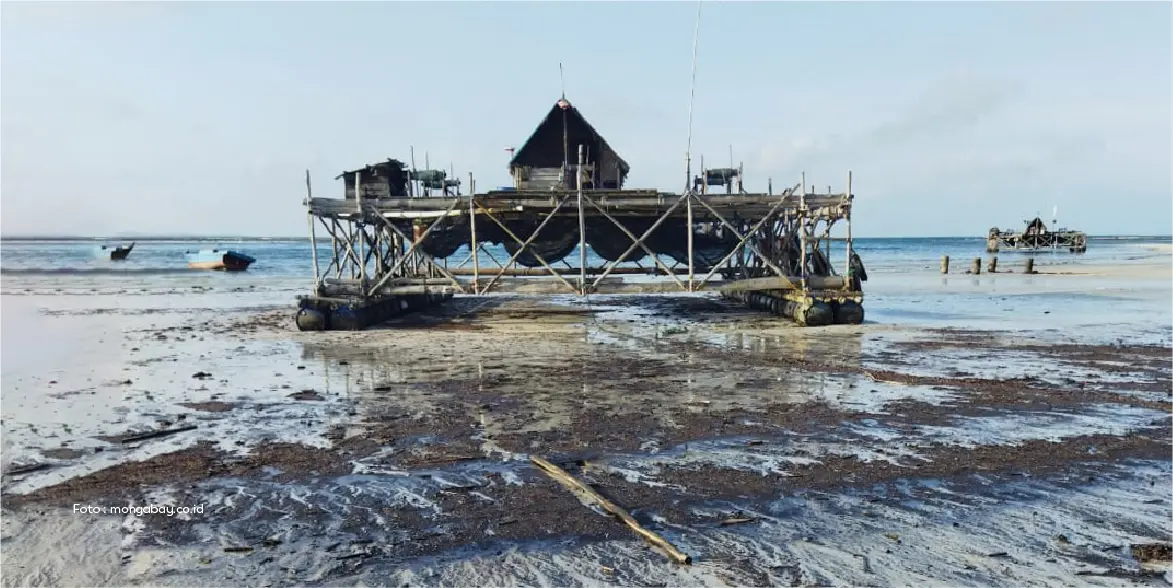
Apart from disrupting the activities of the local community, whose primary livelihoods are in aquaculture and fishing, the tourism sector also experiences significant losses every time this oil waste arrives. This includes popular destinations like White Sand, Gunawan Beach, Agro Beach, and Bamboo Beach, all located in Teluk Bakau Village. Bamboo Beach, in particular, has been known for offering clean beaches and delicious seafood for tourists. However, with the arrival of this waste, the management is forced to close their area. It’s worth noting that the seafood dishes served here are not purchased from external seafood suppliers but are the direct catch and cultivation of local fishermen.
The substantial presence of this oil waste undoubtedly disrupts the primary activities of coastal communities involved in aquaculture, as their fish farms also become contaminated. Additionally, the fishermen who go out to sea find their fishing gear automatically affected by the oil waste. This recurring waste not only disrupts the fishermen’s catches but also their livelihoods. Kurnia expressed hope that a solution can be found soon for the oil waste problem, so it no longer affects the livelihoods of the fishermen.
No Certainty About the Cause of the Oil Waste
The contaminated seawater not only pollutes the coastal areas but also generates air pollution, as the oil residue adhering to fish cages emits an unpleasant odor. To date, no one has successfully identified the source of the oil waste that disrupts the fisheries industry on Bintan Island. The operators of Bamboo Beach even revealed that this time the waste is far worse than in 2022.
The operators of tourist areas on Bintan Island have already brought this issue to the attention of PSDKP Bintan, the Department of Marine Affairs and Fisheries of the Riau Islands Province, the Harbor Master’s Office, and even the local military unit (Babinsa), with the hope that this problem, which has a massive impact on the people of Bintan, can be resolved promptly. The presence of oil waste presents a challenge to the government, which is currently focused on implementing various programs and policies to ensure the quality and sustainability of marine resources.
Aruna hopes that this longstanding and worsening issue can be addressed promptly. Efforts from the government and support from various stakeholders are crucial in identifying the source of the waste and preventing its recurrence. Meanwhile, Aruna Hub, together with the community and local heroes, continues to encourage fishermen to use environmentally friendly engines when at sea to prevent oil leaks from engines that can harm the environment and disrupt the natural balance.
KKP Develops IMIP Technology for the Advancement of Indonesian Fisheries, Aruna Holds an Outreach Program
Minister of Maritime Affairs and Fisheries, Sakti Wahyu Trenggono, held a meeting with Lars Bo Larsen, the Danish Ambassador, and Anne Marie, the Ambassador of Technology Denmark, at the Ministry of Maritime Affairs and Fisheries (KKP) in early 2023. The important topic discussed during the meeting was the development of the new Integrated Maritime Intelligent Platform (IMIP) satellite technology, officially launched by KKP to strengthen Indonesia’s fisheries surveillance system based on technology.
Vast Sea Area Poses Challenges for Surveillance
Indonesia has an extensive maritime territory, making satellite technology essential for KKP to monitor fishing resources within Indonesian jurisdictional waters. This helps prevent illegal, unreported, and unregulated fishing (IUUF), which negatively impacts the ecosystem and domestic fishing industry. Trenggono emphasized the importance of the environment and the well-being of fishermen, stating that the implementation of IMIP is crucial to provide fishermen with real-time updates and information.
KKP Opens Technological Collaboration Options to Strengthen Indonesian Fisheries
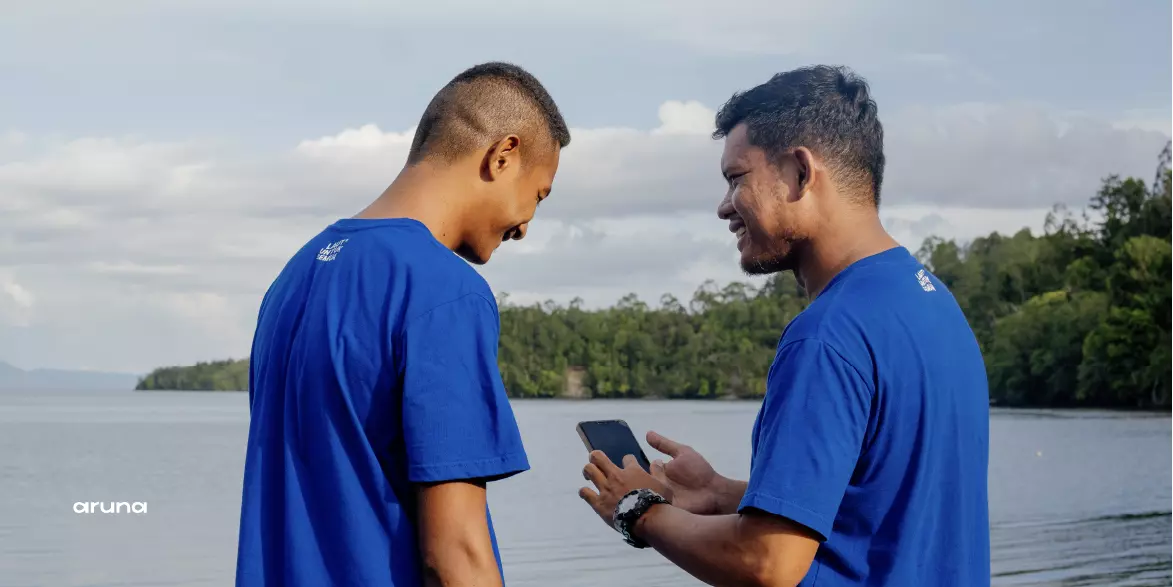
“On the coast, there are many challenges. The 2-mile stretch from the coast is a highly vulnerable area with many conflicts. The area includes seagrass and mangroves. With this technology, monitoring can be optimized,” Trenggono explained. His efforts to establish technological collaborations with friendly nations were appreciated by Ambassador Lars Bo Larsen as a suitable step to enhance surveillance technology to ensure sustainable fisheries and combat IUUF activities. Lars Bo Larsen also acknowledged that surveillance technology is one of the solutions to promote a healthy marine ecosystem and a productive Indonesian fisheries sector.
The development of IMIP, also known as the Command Center, is expected to detect vessel profiles and movements passing through Indonesian waters and the Exclusive Economic Zone. The system can also detect vessel administrative details, including Fishing Permits (SIPI). This technology will aid the government in advancing Indonesian fisheries and implementing a measured quota-based fishing program with regulated fishing quotas and zones.
IMIP Satellite Functionality Will Continue to Be Developed by KKP
The satellite technology developed by KKP in collaboration with Denmark will be continuously improved. This strengthening of satellite technology aims to reaffirm KKP’s commitment to sustainable marine management, supporting economic growth, improving the well-being of communities, and preserving the ecosystem’s health. Additionally, the Command Center’s presence will help monitor water conditions for oil spills and oversee the sustainability of coastal ecosystems, including the health of coral reefs and mangrove forests.
Aruna, as a fisheries company prioritizing the appropriate use of technology for advancing Indonesian fisheries, will continue to support KKP’s positive efforts in preserving ecology while promoting the welfare of fishermen. With Aruna’s connection to over 40,000 fishermen throughout Indonesia through the Local Hero and Aruna Hub programs, two-way communication efforts have been conducted to address illegal and overfishing practices through regular programs like the Aruna Fishermen’s Gathering (Sarasehan). It is hoped that in the future, fisheries products supplied to domestic and global markets will be free from IUUF practices.
Sustainable Fisheries Partnership as the Solution for Implementing Blue Economy
The Indonesian government, through the Ministry of Marine Affairs and Fisheries (KKP), has announced the implementation of the blue economy, where the government is committed to restoring the balance of marine habitats and accelerating the marine economy. KKP has even set 5 priority programs that will continue to be implemented to support the blue economy. To successfully carry out these 5 priority programs, KKP sees sustainable fisheries partnership as the most appropriate solution to increase the participation of all stakeholders in supporting the government to achieve its goals.
1. KKP Establishes Sustainable Fisheries Partnership with the World Bank
Of the 5 programs that KKP has identified as priorities to support the implementation of the blue economy concept in Indonesia, they include expanding marine conservation areas, measuring fish catches based on quotas, managing marine, coastal, and inland cultivation, sustainable coastal and small island management, and managing plastic waste in the sea. To successfully carry out the first priority program of expanding marine conservation areas, KKP has even initiated the Insan Terang – Lautra program, a conservation area development program that is funded by the World Bank.
2. Insan Terang – Lautra strengthens conservation management while increasing the fisheries industry
KKP continues to improve infrastructure to support the conservation expansion program through the Insan Terang – Lautra Coral Reef Infrastructure – Prosperous Ocean program. By emphasising sustainable fisheries partnerships, this infrastructure development will be carried out by collaborating with the World Bank. The Insan Terang – Lautra program, which is planned to begin operating effectively in mid-2023, aims to improve the welfare of coastal communities by managing conservation areas that are considered to have marine and fisheries resources.
In other words, the Insan Terang – Lautra program is expected to not only expand and strengthen conservation area management but also provide a livelihood for coastal communities by implementing sustainable aspects in fisheries industry activities.
3. Insan Terang – Lautra Strengthens Conservation Management and Boosts Fisheries Industry
Through this, improving coral reef management and effective conservation management that supports ecological and economic progress can be achieved together. Sustainable fisheries partnerships can also create synergies between the government and stakeholders, especially fishery companies. From the perspective of monitoring and evaluating programs, the government and collaborating parties together with the community can monitor to ensure that KKP’s priority programs run smoothly.
This is similar to what Aruna implements in building synergy with coastal communities and fishermen. Together with Aruna Hub, each party including internal Aruna, Local Heroes, and fishermen transfer knowledge and monitor each other to ensure that sustainable fishing activities can run well and continue to provide benefits.
Pelagic Fish and Demersal Fish, the Primadonna of Sea Fisheries Supply
Until now, consumers of fishery products have only distinguished fish based on their water habitat, namely freshwater fish, brackish water fish, or saltwater fish. If asked about pelagic or demersal fish, many people are still unfamiliar with the classification of these types. However, the largest export market for fisheries supply comes from fish that originate from pelagic and demersal species.
Unlike large players in the fisheries industry, they are certainly very familiar with the characteristics and differences between pelagic and demersal fish. The classification of pelagic and demersal fish is based on the type of marine habitat.
1. Definition of Pelagic Fish and Demersal Fish
Pelagic fish are fish that live on the surface of the water and live in groups.
Demersal fish are fish that live on the bottom of the muddy, sandy and rocky sea floor.
The classification of pelagic fish is further based on their size, namely small and large pelagic fish. Unlike pelagic fish, Syahrizal Siregar, Business Operations Officer of Aruna, stated, “The classification of demersal fish is distinguished by more complex characteristics based on their density and swimming ability, namely shape and bentopelagic. As an integrated fisheries commerce in the fisheries sector, Aruna also wants pelagic and demersal fish species to be familiar to the general public.”
2. Differences between Pelagic Fish and Demersal Fish
- Individual vs Group
The most distinguishing characteristic between these two types of fish is how they live in their habitat, as pelagic fish are accustomed to living in groups while the other type is accustomed to living individually. - Oil content in the body
Demersal fish only have an oil content of 1%-4% of their total body weight. On the other hand, oil can be found in up to 30% of the body of pelagic fish, making the flesh of demersal fish included in the category of white fish.
3. Primadona Fisheries Supply Commodities from Pelagic and Demersal Fish
Each pelagic and demersal fish in Indonesian waters is a primadona commodity in the fisheries sector, both for domestic and international markets. Some examples include:
- Pelagic fish: skipjack, tuna, mackerel, Indian mackerel, anchovy
- Demersal fish: grouper, snapper, milkfish, pomfret, red snapper
The general public is certainly familiar with and consider the above fish as food. Syahrizal said, “Not only in the Aruna ecosystem, but in general, from each of these two types of marine fish, the primadona and widely available in various seafood suppliers are skipjack, which is a pelagic fish, and grouper from demersal fish.”
4. Despite Having Economic Value, Fish Sustainability Must be Maintained
Both pelagic and demersal fish have been commercially caught for a long time to meet fisheries supply needs and serve as the main dish in restaurants and households. Therefore, the habitats of both types of fish must be monitored to prevent overfishing, which can cause environmental damage and drastically reduce their availability.
Aruna, as a fisheries company that prioritizes the application of sustainable fisheries concepts, continues to work with fishing communities to maintain the availability of fish and their habitats, and to use fishing methods that do not harm the environment. “With the increasing number of Aruna Hubs spread across various coastal areas in Indonesia, the application of sustainable fishing methods has been proven to improve the livelihoods of fishermen in terms of understanding and economics,” said Syahrizal when asked about one of the steps Aruna takes to implement sustainable fisheries.
In addition to successfully opening up wider market access for local fishing communities to meet their fisheries supply needs, many fisheries companies through their ecosystems also make many efforts to ensure that the economy and ecology can work in synergy. Aruna is an example of a fisheries company that can encourage its member fishermen to actively participate in preserving the aquatic habitat.
Making Indonesia the World’s Maritime Axis in 2045
The Republic of Indonesia, with its vast archipelagic territory and vast marine resources, has set its vision to become the world’s maritime axis in 2045. However, there are many obstacles to overcome in various sectors that must be addressed to achieve this grand goal. One way to facilitate Indonesia’s progress is to make Indonesia the center of sustainable fisheries in the world.
Indonesia is one of the world’s important ports
The world’s maritime sector is not just about fisheries and marine affairs but also involves sea trade routes that have been dominated by neighboring countries. Vice President K.H Ma’ruf Amin stated that 90% of global trade transported through sea routes, 40% of which pass through the Malacca Strait, especially Indonesian waters. From the global sea trade route aspect, Indonesia already has a fairly important position. Even thanks to various improvements in dwelling time at Indonesian ports by the end of 2022, it will only take 2-2.5 days, far shorter than in 2016, which could take up to one week.
On the maritime infrastructure side, the Indonesian government has made many improvements to realize its vision of becoming the world’s maritime axis, including the marine resources handled by the Ministry of Maritime Affairs and Fisheries (KKP) and the Coordinating Minister for Maritime Affairs and Investment (Menko Marves). The real results of the synergy between these two ministries to strengthen Indonesia’s maritime pillar are becoming increasingly visible.
Making Indonesia the World’s Maritime Axis and the Center of Sustainable Fisheries
With the various recorded advancements, is Indonesia already worthy of the title of maritime axis or the center of sustainable fisheries in the world? The answer is still not yet, but it is getting closer. The government, through the KKP, has even created five priority programs that have been running with the aim of advancing the economy as well as the ecology of the maritime sector.
The Food and Agriculture Organization (FAO) through the report entitled “The State of World Fisheries and Aquaculture 2022” released data that China is the country with the highest marine fish production in the world and the main seafood supplier with a yield of 11.77 million tons, while Indonesia’s total production is 6.4 million tons. Meanwhile, the big problem that still hinders the fisheries industry in Indonesia is illegal fishing. To reduce illegal fishing, the KKP has even issued the Measured Fish Capture (PIT) policy.
Implementation of the PIT Program as a Solution to 2 Problems at Once
The PIT policy has also been implemented by the Chinese government to regulate target vessel limits, fishing gear used, and fishing permits, but the Chinese government encourages fishermen to catch as many fish as possible (overfishing). This can be used as a weapon by Indonesia by applying sustainability awareness and continuously improving production capacity so that Indonesian fish will be more valued because they are obtained or cultured while balancing the ecology in line with the blue economy concept.
Indonesia’s potential marine resources are still very large because China, with an area of 3.5 million km2 of sea, can produce fish with a total of 11.77 tons. Meanwhile, Indonesia, with an area twice the size of China’s sea (6.3 million km2), can only produce 6.4 million tons. This weakness can actually be turned into strength so that with the KIP policy taken by the government while running four other priority programs, it can increase fishery production through other channels, namely cultivation. The Indonesian government’s step to make PIT a solution to reduce illegal fishing while increasing fishery cultivation efforts is a brilliant effort.
Support from all stakeholders in the fisheries industry is needed.
What needs to be noted by fisheries practitioners from upstream to downstream, including Aruna itself as a fisheries company, is to continue to support Indonesia to strengthen its pillars in order to become the world’s maritime axis and center of sustainable fisheries in the world. Especially with the presence of Aruna Hub which has helped implement sustainable fisheries and increase fishermen’s income, Aruna will continue to support the government to advance the maritime world, especially the fisheries sector in Indonesia.
The Importance of Human Resource Investment, KKP Realizes OII Transformation
Minister of Maritime Affairs and Fisheries, Sakti Wahyu Trenggono once said, “The key to the successful implementation of blue economic policy is excellent human resources.” Amid the government’s active implementation of the blue economy concept that is closely related to sustainability, the government is also seriously considering sustainable fisheries partnership jobs that can be filled by competent professionals to advance the world of fisheries in the Republic of Indonesia. Therefore, the Ministry of Maritime Affairs and Fisheries (KKP), through the Marine and Fisheries Research and Human Resources Agency (BRSDM Perikanan), has united various fisheries education institutions into the Ocean Institute of Indonesia (OII).
Previously, KKP through BRSDM Perikanan had 20 higher and secondary education units and a Fisheries Business Expertise Polytechnic (AUP) located in Jakarta. All of these education units were finally merged to create a single institute called OII. The government carried out this merger because it was well aware that strategic steps were needed to fill the need for sustainable fisheries partnership jobs with the right human resources (HR) and job opportunities.
OII will become the only institution ready to fulfill Sustainable Fisheries Partnership Jobs
“To that end, I have asked the Head of BRSDM to design the formation of the Ocean Institute of Indonesia, which will later become the only higher education institution in Indonesia specifically in the field of marine and fisheries,” concluded Minister Trenggono. OII, which was officially launched in August 2022, is not only a vocational education institution, but also a scientific education institution that has collaborated with foreign universities from South Korea, Hong Kong, Japan, Australia, and others.
OII Study Programs Designed to be More Relevant to Industry Needs
After its transformation, the Ocean Institute of Indonesia now offers various study programs that have been prepared to be more relevant to the needs of the fishing industry and sustainable fisheries partnership jobs, including:
- Fisheries Mechanization
- Fishery Capture Technology
- Machining
- Fishery Product Processing Technology
- Aquaculture Technology
- Water Resource Utilization Technology
- Fishery Extension, Resource Utilization
- Marine Engineering Techniques
- Fishery Capture Technology
- Ship Machining
- Agribusiness
- Fishery Pathology Handling Technology
The transformation of OII was also carried out by improving the HR of teaching staff and academic actors in the fisheries sector by holding the 2022-2025 Vocational and Fisheries Professor Program.
Of course, in the future, OII students will also participate in the fisheries industry not only as experts and professionals in the ranks of KKP but also can develop business ecosystems. This was reflected during a visit by members of the DPR, where OII students had already developed the entrepreneurship field by displaying marine and fishery products from the Jakarta, Serang, and Bogor campuses.
Taruna OII Has Successfully Developed Economically Valuable Products
Not only focusing on fishery product development, but Taruna also showcased a unique product, holy mangrove tea, which contains antioxidants and prevents various diseases such as cancer, diarrhea, hepatitis, digestive disorders, premature aging, and many other health benefits. This mangrove tea exhibited by Taruna can be used as a sample material for business incubation that involves product development and market expansion while still considering the aspect of sustainability since mangrove plays a significant role in the marine and fishery ecosystem.
Preparing competent human resources to fill various positions in sustainable fisheries partnership jobs must receive support and involvement from various sectors. Moreover, 54% of the total population in Indonesia is comprised of youths. Aruna as a fishery company hopes that the coastal community can have adequate skills to empower their local economy.
Another important thing to consider is that our country needs not only human resources that match the needs of the job market, but also those who can expand the job availability. Given the enormous potential of marine and fishery resources in Indonesia that have not been fully utilized, Aruna Hub will continuously transfer all necessary knowledge so that progress can be made from upstream to downstream, and even in the seafood supplier line, where the coastal community can participate and have a role to play.
Freshwater Vannamei Shrimp Farming, A Promising Fisheries Business?
In line with the blue economy concept, the government, through the Ministry of Maritime Affairs and Fisheries (MMAF), has decided to gradually reduce fishing quotas. Of course, this MMAF-led policy has prepared a solution to the problem of quota restrictions by intensifying fishermen’s agricultural activities. A promising alternative fishery for anglers is freshwater Vannamei shrimp farming.
Vannamei shrimp are marine animals that naturally live in the sea, but with some modifications they can be reared in freshwater. This method is not popular yet, but many entrepreneurs have already done it and its cultivation can bring satisfactory results.
If done right, the Vannamei shrimp farm will become a promising fishery
There are certainly notable differences between freshwater and seawater, since seawater contains many minerals that freshwater lacks. Therefore, before breeding Vannamei shrimp in fresh water, farm fishermen must first prepare special minerals so that their composition is close to that of sea water.
shrimp need to be modified and adjusted to adapt
Several ingredients must be added to freshwater to make it a good breeding ground for Vannamei shrimp. These include clay, agricultural lime, cross salt, potassium chloride (KCl), white spirit, potassium carbonate, and magnesium chloride. By adding the above ingredients in the right composition, the freshwater substrate applied is ready to be used as a new habitat for Vannamei shrimp seeds.
After achieving the equivalent mineral composition of seawater in freshwater media, shrimp seeds naturally have to adapt to the media used, since the modified freshwater media are characterized by low salinity. This adaptation can be done by rearing 1 to 10 larvae. After acclimatization, the shrimp seeds can be released into the rearing pond depending on the last salinity.
Vannamei shrimp are more disease resistant when reared in fresh water
From the cultivation of freshwater Vannamei shrimp, the unique fact was gained that shrimp farmed outside of their natural habitat actually show increased resistance to WSSV (White Spot Virus) or Myo-disease. This fact can be a magnet and make farming freshwater vannamei shrimp a promising fishery, especially as an alternative income for fishermen.Since this culture can also be carried out in places far from the coast, fishermen can build culture media on their terrace.
The
vannamei shrimp farming is not only a promising fishery, but there will also be knock-on effects as the demand for various raw materials needed to modify freshwater increases. This creates new economic potential for people to become suppliers of minerals. Aside from making shrimp distribution easier, fish suppliers can also get a more stable price because they don’t have to order from too far away. Of course, the knock-on effect of growing
crayfish will be very positive for the fishing industry.
Aruna Supports the Government in Providing Broader Access
The potential of cultivating various variants of sea shrimp in modified freshwater media must be widely socialized to the public, especially fishermen affected by fishing quotas restrictions. Aruna Hub, as part of the fisheries ecosystem, will gladly support and become a government partner to disseminate this cultivation potential while still prioritizing sustainable fisheries aspects. The implementation of sustainability insights in the fisheries sector is essential to be promoted on every occasion so that economic progress can maintain ecological health, a fundamental principle that is in line with the concept of a blue economy.