

Indonesia Proudly Claims Pempek as the Most Delicious Seafood Dish in the World
In the world of culinary delights, Pempek, a beloved Indonesian dish, has caught the attention of food enthusiasts worldwide. According to TasteAtlas, a global culinary encyclopedia, Pempek is rated an impressive 4.8, making it the world’s most delectable seafood dish. This rating is on par with Amêijoas à Bulhão Pato, a seafood dish from Portugal, and slightly higher than Japan’s iconic Sushi.
This savory dish is crafted from finely ground fish meat mixed with sago flour. Its allure lies in the perfect harmony of the chewy texture of the Pempek dough and the tenderness of the mackerel fish meat used. Each bite of Pempek offers a unique sensation.
Legend has it that Pempek was first introduced by a Chinese merchant known as “Apek.” He lived during the reign of Sultan Mahmud Badaruddin II in the Palembang Sultanate. Apek had the brilliant idea of utilizing the abundant fish by creating various dishes, one of which was Pempek. He ground fish meat, mixed it with sago flour, and fried it to a crisp and delicious perfection.
Pempek is readily available in numerous eateries, restaurants, and street food stalls across Indonesia. The primary ingredients for making Pempek are mackerel fish, sago flour, and water. The process involves extracting meat and skin from fresh mackerel. The fish meat is then minced and mixed with sago flour, water, and seasonings like garlic and salt. The mixture is then shaped into the desired type of Pempek.
There are various Pempek variations, including kapal selam (submarine), lenjer, adaan, and kulit (skin). Kapal selam Pempek has a chewy texture with a boiled egg filling in the center. Lenjer Pempek is cylindrical with a soft texture. Adaan Pempek is round, while kulit Pempek is flat and crispy due to the mackerel skin content.
Pempek is traditionally served with a distinctive spicy and tangy sauce called “kuah cuko.” The kuah cuko is made from a blend of ingredients like water, vinegar, sugar, salt, garlic, and chili. The combination of sweet, sour, and spicy flavors refreshes the palate when paired with Pempek. Additionally, Pempek can be garnished with fresh cucumber slices, dried shrimp (ebi), and crunchy crackers to enhance its deliciousness.
Presently, South Sumatra, particularly Palembang, has become the hub of Pempek production in Indonesia. According to the Pempek Entrepreneurs Association in Palembang, Pempek production reaches 11 tons per day and increases to 17 tons per day during the holy month of Ramadan. Besides catering to local consumers, Pempek is also sold to other regions and even internationally. The Greater Jakarta area is a primary destination for Pempek shipments from South Sumatra. Various countries, including the United States, Malaysia, Singapore, Australia, and Japan, import this Indonesian culinary gem.
As an internationally recognized dish, Pempek exemplifies Indonesia’s vast potential in the culinary industry. Its inclusion among the world’s most delicious seafood dishes in 2023 is not just an accomplishment but also a significant step in introducing Indonesia’s culinary richness to the international stage. Pempek serves as an Indonesian culinary ambassador, showcasing the expertise in transforming seafood into a delectable dish.
If you’re eager to try making Pempek at home, ensure that you use fresh, high-quality ingredients. You can rely on a trusted supplier of marine fish, such as Seafood by Aruna. By choosing high-quality mackerel fish, you can guarantee the optimal taste and texture of your Pempek. Your homemade Pempek will captivate your taste buds, in line with the internationally acclaimed Pempek delicacy.
Advancing the Fisheries Main Industry through Collaboration
Farid Naufal Aslam, the Co-Founder and CEO of Aruna, shares his experiences while running Aruna, a company dedicated to making sustainable fisheries the driving force for the advancement of the fisheries main industry. This vision aligns with the government’s commitment to making the blue economy a central focus of national development, with maritime activities at its core.
Oil Pollution Disrupts Aquaculture Efforts in Bintan
Fishermen engaged in aquaculture and fishing activities around Bintan Island are once again facing a bitter pill to swallow, as almost every part of the coastal area is bound to be contaminated by uncontrolled black oil. Several sources reveal that the presence of black oil polluting the coastline and coastal areas has been recurring for decades.
“Yes, we just have to accept it every year,” said Kurnia, the Chairman of Neighborhood Association (RT) 02 Neighborhood Unit (RW) 01 in Teluk Bakau Village, Gunung Kijang District, Bintan, Riau Islands. He expressed that they are powerless to address the issue of oil pollution in their area. Instead of reporting the incidents to the relevant authorities, he and the residents prefer to work together to clean up the oil waste because the presence of black waste has become a common occurrence. “Even if we clean it up, the waste will come back when the tide rises,” Kurnia explained.
In addition to disrupting aquaculture and fishing activities, it also has an impact on the tourism sector
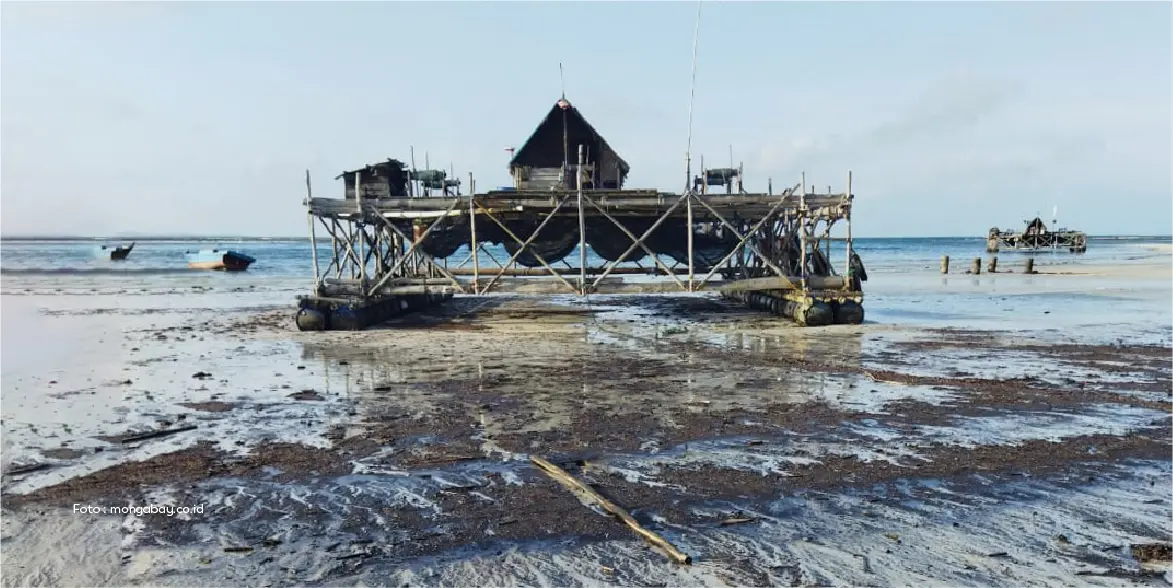
Apart from disrupting the activities of the local community, whose primary livelihoods are in aquaculture and fishing, the tourism sector also experiences significant losses every time this oil waste arrives. This includes popular destinations like White Sand, Gunawan Beach, Agro Beach, and Bamboo Beach, all located in Teluk Bakau Village. Bamboo Beach, in particular, has been known for offering clean beaches and delicious seafood for tourists. However, with the arrival of this waste, the management is forced to close their area. It’s worth noting that the seafood dishes served here are not purchased from external seafood suppliers but are the direct catch and cultivation of local fishermen.
The substantial presence of this oil waste undoubtedly disrupts the primary activities of coastal communities involved in aquaculture, as their fish farms also become contaminated. Additionally, the fishermen who go out to sea find their fishing gear automatically affected by the oil waste. This recurring waste not only disrupts the fishermen’s catches but also their livelihoods. Kurnia expressed hope that a solution can be found soon for the oil waste problem, so it no longer affects the livelihoods of the fishermen.
No Certainty About the Cause of the Oil Waste
The contaminated seawater not only pollutes the coastal areas but also generates air pollution, as the oil residue adhering to fish cages emits an unpleasant odor. To date, no one has successfully identified the source of the oil waste that disrupts the fisheries industry on Bintan Island. The operators of Bamboo Beach even revealed that this time the waste is far worse than in 2022.
The operators of tourist areas on Bintan Island have already brought this issue to the attention of PSDKP Bintan, the Department of Marine Affairs and Fisheries of the Riau Islands Province, the Harbor Master’s Office, and even the local military unit (Babinsa), with the hope that this problem, which has a massive impact on the people of Bintan, can be resolved promptly. The presence of oil waste presents a challenge to the government, which is currently focused on implementing various programs and policies to ensure the quality and sustainability of marine resources.
Aruna hopes that this longstanding and worsening issue can be addressed promptly. Efforts from the government and support from various stakeholders are crucial in identifying the source of the waste and preventing its recurrence. Meanwhile, Aruna Hub, together with the community and local heroes, continues to encourage fishermen to use environmentally friendly engines when at sea to prevent oil leaks from engines that can harm the environment and disrupt the natural balance.