

Wow, Overfishing Reduced Fish by Almost 90%?
Overfishing is a serious threat to the sustainability of fish resources and marine ecosystems. In recent decades, the number of fish caught has exceeded their natural population levels, resulting in a decline in fish stocks worldwide.
In Indonesia, this phenomenon is increasingly worrying. According to the results of the research “Trends in Marine Resources and Fisheries Management in Indonesia in 2022” conducted by the World Research Institute, it was found that more than 50% of the wild fish population in Indonesia experienced overfishing. This not only impacts the current generation, but also future generations.
If not handled properly, it is estimated that by 2050, the food fish population will collapse. This means that future generations will have difficulty getting fish as a food source.
1. Reason Overfishing
Factors that can cause overfishing are:
Use of fishing gear that is not environmentally friendly.
Fishing gear that is not environmentally friendly can catch fish non-selectively, including non-target species (bycatch) and small-sized species.Excessive and out-of-season fishing.
Excessive fishing can result in a drastic decline in fish populations. Meanwhile, fishing outside the season can disrupt the spawning and growth of fish.Unprotected fishing areas.
Unprotected areas are vulnerable to irresponsible fishing practices because there is no control over fishing.
2. Impact Overfishing
Impact overfishing consumption of fish species is very large. If this continues, fish populations could decline by up to 90%. This will result in disruption of the balance of the food chain in the marine ecosystem. Fishermen’s catches will also decrease, so fishermen’s income will decrease.
In the long run, overfishing have an impact on future generations. One impact is the loss of fish protein sources, which has a negative impact on children’s health and nutrition. Fish is an affordable and easy to obtain source of protein, so it is very important for children to grow and develop optimally.
Not only that, overfishing also impacts the marine ecosystem as a whole. Damage to coral reefs due to overfishing can reduce marine biodiversity and loss of habitat for marine species.
3. Aruna’s Efforts to Prevent Overfishing
As a fishing company that cares about the sustainability of marine resources, Aruna plays an active role in preventing overfishing. We use environmentally friendly fishing gear, such as traps, hand lines, longlines, lift nets and gill nets to reduce negative impacts on the marine ecosystem.
Apart from that, Aruna also supports the Measurable Fishing policy initiated by the Ministry of Maritime Affairs and Fisheries (KKP). We try to comply with the rules that have been stated in the Measured Fishing (PIT) policy so that the fish population is maintained.
In order to support small-scale fisheries, we empower local fishermen by providing training and mentoring assistance. This is done to improve the skills and productivity of fishermen, so that fishermen can obtain higher quality catches.
Overfishing is a serious problem that must be addressed immediately. We invite the entire community to play a role by choosing fishery products from companies that implement sustainable fishery practices. In this way, we can protect marine resources for a better future.
Let’s work together to preserve fish resources and marine ecosystems so that future generations can still enjoy delicious and nutritious fish.
Consuming Fish Can Prevent Stunting
Malnutrition in children is still a worrying problem. Data from the 2022 Indonesian Nutrition Status Survey (SSGI) shows that the prevalence of stunting among toddlers in Indonesia is 21.6%. This figure is still far from the target set by the government, namely 14% in 2024.
Stunting is a condition where children experience suboptimal physical growth due to chronic malnutrition. Adequate nutritional intake is very important for children’s growth and development. Therefore, there is a need to increase nutritional interventions, one of which is consuming fish regularly. Check out the following review to find out the benefits of consuming fish in preventing stunting.
Benefits of Consuming Fish in Preventing Stunting
Why Can Consuming Fish Prevent Stunting?
Fish is a source of high quality animal protein and contains various essential amino acids needed by the body. Protein plays an important role in supporting children’s physical growth, including bones, muscles and other body tissues. Amino acids are also needed to activate enzymes and growth hormones.
Regular consumption of fish, namely 2-3 times per week, can contribute to preventing stunting. In Indonesia, fish is a food source that is easy to obtain and the price is affordable. People can consume various types of nutritious local fish, such as mackerel, tuna, tuna and mackerel.
Children who are given the best nutritional intake in the first 1000 days of life, or from the time they are in the womb until the age of 2 years, have the potential not to become stunted. On the other hand, malnutrition during this period can increase the risk of stunting which has an impact on children’s quality of life.
Fish Consumption in Indonesia
The national fish consumption figure (MMR) will reach 56.48 kilograms per capita in 2022. In that year, on average each individual consumed 56.48 kilograms of fish in one year. This data includes various types of fish, both freshwater fish and marine fish.
However, this number still needs to be increased. The Ministry of Maritime Affairs and Fisheries (KKP) has set the national MMR target in 2024 to be 62.05 kilograms per capita. The increase in fish consumption shows that people are increasingly aware of the importance of adequate nutritional intake, so that it can prevent stunting.
The Role of the KKP in Stunting Prevention Efforts
KKP has the GEMARIKAN program (Fish Eating Popularization Movement) which aims to increase fish consumption for the Indonesian people. It is hoped that this program can encourage people to use fish as the main source of protein to meet nutritional needs. To support the implementation of this program, cooperation is needed involving various components of society, including families.
Families have an important role in supporting the GEMARIKAN program. Serve delicious and attractive fish in the daily menu so that children like to eat fish. Choose fish and seafood that comes from sustainable sources to support fisheries sustainability. Apart from that, monitor your child’s growth regularly so you can detect potential stunting early.
Fish consumption plays an important role in preventing stunting. That is why, every individual needs to consume fish regularly, especially pregnant women and children. Consuming local fish can also support the sustainability of fisheries so that fish remains an affordable food source for Indonesian people in the future.
Aruna invites the entire community to increase fish consumption in the family to support children’s growth and development. With regular consumption of fish, Indonesian children will grow up to be healthy, intelligent and not stunted.
Let’s eat fish so that Indonesian children are free from stunting!
The Extensive Supply Network Empowers Aruna in the Fisheries Industry
Aruna has established its position as one of the largest integrated fisheries companies in Indonesia. Throughout its eight-year journey, Aruna has contributed greatly to the welfare of fishers and coastal communities throughout Indonesia.
Aruna’s dedication and consistency in building and developing Indonesia’s fisheries and marine sector has received recognition from various parties, including the Minister of Marine Affairs and Fisheries, Sakti Wahyu Trenggono. This is proof of Aruna’s commitment to advancing the national fisheries industry.
Aruna Supply Network Meeting Seafood Demand
The global seafood market is predicted to experience rapid growth of 8.92%, opening up great opportunities for the industry and fisheries business actors to increase market share. With high optimism, Aruna is ready to seize this opportunity by expanding the variety of seafood products offered to meet the growing global demand.
Supported by more than 55,000 fishermen and 150 supply points spread throughout Indonesia, Aruna has the power to reach global and domestic markets. With our extensive supply network, we can provide various types of premium seafood, such as tuna, crab, lobster, and other seafood products.
In addition to focusing on the domestic market, we are actively expanding our reach to global markets, including Japan and the Middle East. Our goal is to meet the demand for seafood in various countries by offering high-quality products and services.
Farid Naufal Aslam, the Co-Founder and CEO of Aruna, explained that the company believed it could create greater opportunities in the global market for local seafood products. He stated, “This is evidenced by the strength of our services, as we have reached 90% of provinces in Indonesia.” Aruna expects that people worldwide can enjoy the freshness and best quality of seafood from Indonesia.
Leveraging Technology for Sustainable Success
In today’s modern era, technology is crucial for supporting the success of many industries, including fisheries. Aruna is committed to innovating by using digital technology and data management to enhance the efficiency and effectiveness of our business operations.
An example of our commitment to technology is the SEA for All Commitment 2030, which involves implementing seafood traceability to ensure transparency and accountability in the supply chain.
To achieve this, we have developed technology to monitor the location of fishing areas and have implemented seasonal calendars to identify trends in seafood harvest time. With this system, Aruna can ensure the sustainability of marine resources and improve the welfare of assisted fishers, whose numbers continue to increase from year to year.
The Power of Community Development
Farid emphasized that Aruna’s technological development must start with the establishment of strong, reliable, and impactful coastal communities. The goal is to prepare these communities to embrace all the innovations implemented by Aruna. A compassionate and approachable approach is the main standard that determines the level of trust of fishers and their families in Aruna.
Being eight years old, Aruna continues to demonstrate her dedication to advancing the Indonesian fisheries industry through various breakthroughs and innovations. Market expansion, technology utilization, supply network expansion, and sustainable high-quality product development are fundamental to achieving Aruna’s vision of becoming a leader in the global seafood market.
Environmentally Friendly Fishing Tools for Marine Sustainability
The ocean provides various resources such as food, minerals, and oil. The sustainability of the marine ecosystem needs to be maintained to continue benefiting humanity. However, irresponsible human activities, such as destructive fishing, can threaten the sustainability of the ocean.
Destructive fishing involves capturing fish using tools that damage the marine ecosystem. This method can also lead to the death of unintended fish species. Examples of destructive fishing include the use of poisons, bombs, electric shock devices, trawl nets, or trawl lines. Data from the Ministry of Maritime Affairs and Fisheries (MMAF) shows that there were 653 cases of destructive fishing in Indonesia between 2013 and 2019. This evidence indicates that destructive fishing behavior has caused significant damage to the sea.
Environmentally Friendly Fishing Tools
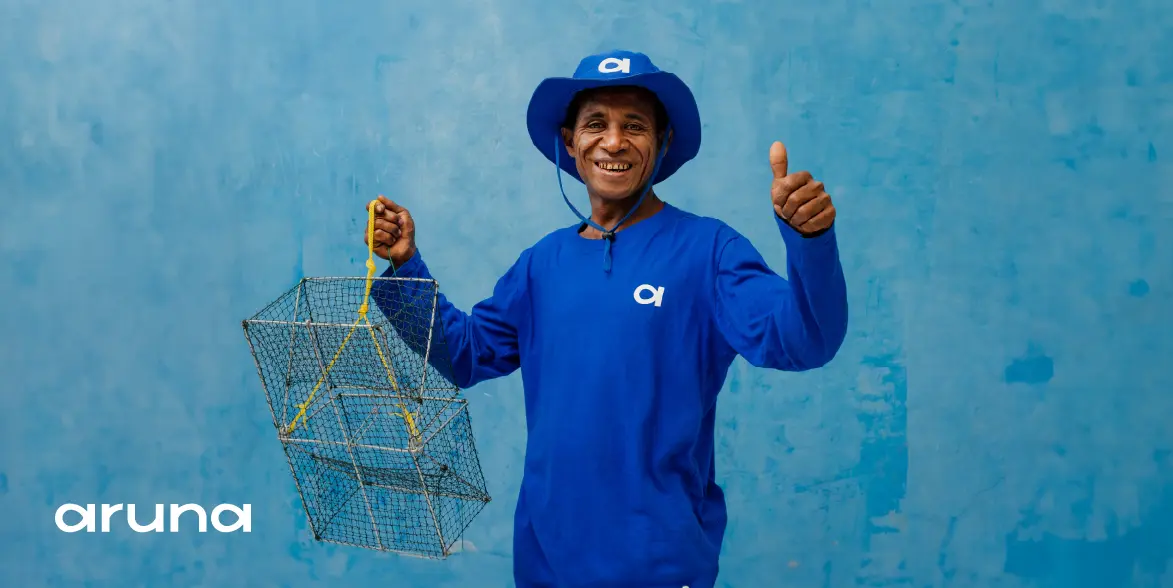
Environmentally friendly fishing tools are those that do not harm the marine ecosystem and fish. Here are three examples of environmentally friendly fishing tools used by fishermen:
a. Fish Traps (Bubu)
Bubu is a traditional fishing tool made from pieces of bamboo arranged and tied with plastic strings. Bubu comes in various shapes, such as square, cylindrical, or trapezoidal. It is placed in the path commonly taken by fish. The principle behind bubu is to trap fish by confusing their vision. Once the fish enters the Bubu, it becomes trapped and cannot escape. Bubu can also be used to catch blue crabs.
b. Gillnet
Gillnets are rectangular fishing nets with the same mesh size. They are designed to entangle fish, especially small to medium-sized ones. Using gillnets, fishermen can catch multiple fish at once.
c. Hook and Line
This fishing tool is used to attract the attention of the target fish, with or without bait. The target fish is caught on the hook attached to the line, and then it is pulled to the surface. Longlines and handlines fall under this category, with handlines typically used for catching large fish.
Impact of Using Environmentally Friendly Fishing Tools
The use of environmentally friendly fishing tools can provide various benefits, including preserving marine biodiversity, preventing damage to marine habitats, and improving the quality of fisheries products. Fishermen and vessels using environmentally friendly fishing tools contribute to the sustainability of the marine ecosystem. This aligns with the MMAF’s policies in implementing the Blue Economy.
Aruna’s Use of Environmentally Friendly Fishing Tools
Aruna is committed to using environmentally friendly fishing tools in its production process. We collaborate with fishermen to develop and use environmentally friendly fishing tools, such as Bubu. Bubu is employed to catch blue crabs, one of our flagship fisheries commodities.
The use of environmentally friendly fishing tools is an effort to protect the marine environment. To support marine ecosystem sustainability, you can choose fisheries products produced using environmentally friendly fishing tools. By choosing Aruna products, you can help maintain the sustainability of the sea. Together, we can contribute to preserving marine resources for future generations.
The Importance of Marine Resource Balance in Implementing Sustainable Fishing
Located in Panama, on Friday, March 3, 2023, an international event called the Global Ocean Accounts Partnership (GOAP) Side Event at the Our Ocean Conference (OOC) has just concluded. Victor Gustaaf Manopo, the Director-General of Marine Spatial Management representing the Government of Indonesia, specifically the Ministry of Maritime Affairs and Fisheries (MMAF), played an active role in this event by emphasizing the significance of ocean resource accounts in addressing the challenges of sustainable fishing management aligned with the blue economy direction.
Since 2021, a pilot project on marine resource accounts has been conducted in 7 Marine Conservation Areas (MCAs) and 1 fisheries region, establishing a strong foundation for Indonesia in determining the extent of ecosystems, conditions, and monetary values for mangroves, coral reefs, and seagrasses on a national scale. Victor revealed this development.
The Reasons Why Marine Resource Balance Matters in the Blue Economy and Sustainable Fishing
The definition of marine resource balance (MRB), according to the MMAF, is a structured and consistent compilation of information, including maps, data, statistics, and indicators about the marine and coastal environment, including social conditions and economic activities related to the seafood supply chain. MMAF has collaborated with GOAP on a pilot project to develop and compile MRB. The ministry, led by Sakti Wahyu Trenggono, views MRB as an ideal reference for implementing marine management that takes into account marine resource assets, economic flows, and the environment, which are closely linked to sustainable fishing.
MRB as an Instrument with National and Global Implications

Victor explained that the challenges of sustainable marine management lie in three aspects: protecting the ocean while maintaining its benefits for humanity, striving for increased ocean protection while considering economic aspects, and ensuring that goods and services from the ocean benefit all parties.
MMAF positions MRB as an instrument that should be involved to assist in the management of conservation areas, marine spatial planning, coastal ecosystem rehabilitation, and marine-based economic development. Considering its national and global policy implications, the Indonesian government prioritizes the development of MRB as something important and urgent. The national and global implications can be outlined as follows:
National Implications:
Providing data and information on biodiversity and ecosystems for national development that supports the achievement of Sustainable Development Goals (SDGs).
Global Implications:
Urgently contributing to Indonesia’s commitments in forums such as the Convention on Biological Diversity (CBD) and the High-Level Panel on Sustainable Ocean Economy (HLP-SOE).
Attended by Many Stakeholders, Indonesia Seizes Its Presence at OOC 2023
The Our Ocean Conference 2023 was attended by representatives from various countries, including Mike Kelloway, Chairman of the GOAP Council; Rick Spinrad, Deputy Administrator of NOAA (United States); Ilana Seid, Permanent Representative of Palau to the United Nations; Palau’s Ocean Panel Sherpa; Per W. Schive, Deputy Director-General of the Ministry of Climate and Environment (Norway); and Ilona Drewry, Head of International Sustainable Blue Finance (United Kingdom). Given that this international forum is a crucial platform for formulating various aspects for the success of the blue economy, it is highly appropriate to reiterate the significance of MRB, which was initiated by Minister Trenggono.
By actively participating in international forums related to SDGs and sustainable fisheries, the role of the Indonesian government will gain respect from other nations. Similarly, Aruna, representing the fishing companies in Indonesia, has consistently advocated for the betterment of national and global communities on various occasions. To advance the fisheries industry successfully, appropriate methods and instruments that preserve ecology must be employed. In the future, Aruna also envisions representing the national fisheries and marine ecosystem on the international stage.
5 Countries Successfully Implementing the Sustainable Fisheries Concept
The Government of the Republic of Indonesia has designated the maritime sector as a crucial axis of the future economy. Beyond embracing the blue economy, the government envisions Indonesia as a global maritime hub. In applying the blue economy, the concept of sustainable fisheries plays a pivotal role.
Countries that have succeeded in Implementing the Sustainable Fisheries Concept are Predominantly European Nations
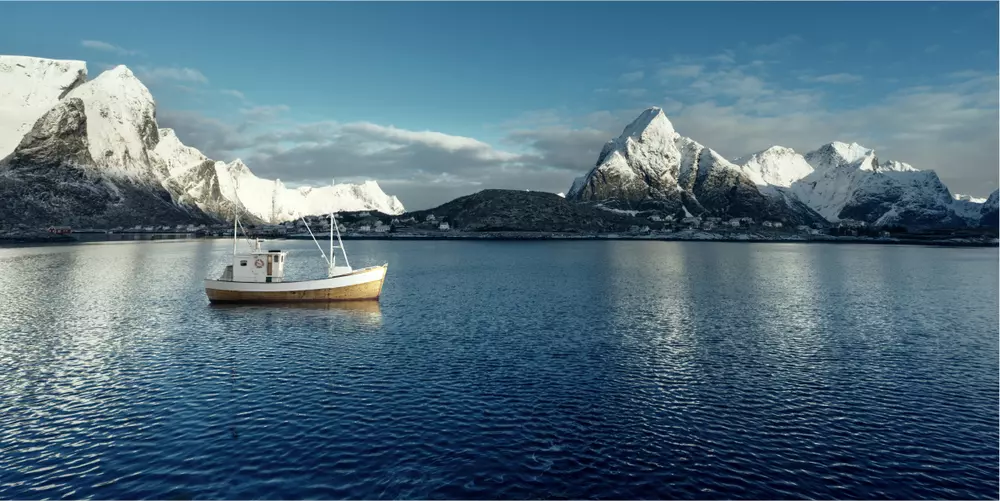 Implementing sustainable fisheries concepts is intricately linked to the blue economy, where economic progress must coexist with ecological preservation. Numerous countries acknowledge the significance of implementing sustainable fisheries concepts, and five countries have successfully put this sustainability concept into practice. Among these, four are European nations. Some of them include:
Canada
Canada has introduced various policies and practices for sustainable fisheries, proving effective. The nation employs stringent fisheries management systems, limiting the annual catch of fish. Moreover, Canada has developed a certification program for sustainable fisheries known as Fisheries Improvement Projects (FIPs).
United States
The United States has diligently worked toward implementing sustainable fisheries. It has introduced laws and regulations to cap fish catch and tightly control fishing activities. The U.S. has also established its certification program for sustainable fisheries, recognized as the Marine Stewardship Council (MSC). This program has successfully generated over 350 sustainable fish products in the global market.
New Zealand
New Zealand has implemented strict regulations to ensure the sustainability of its fisheries. Their effective fisheries management system includes setting fish catch limits, designating limited fishing zones, and prohibiting fishing in critical areas. New Zealand demonstrates a strong commitment to international fisheries sustainability by participating in various global forums and organizations.
Iceland
Iceland has been a leader in sustainable fisheries implementation. This Western European country has an effective fisheries management system, which includes catch limits and environmentally friendly technology usage to maintain marine resource sustainability. Iceland has also developed its own certification for sustainable fisheries called Responsible Fisheries Management.
Norway
Norway has led sustainable fisheries for decades, employing rigorous fisheries management systems. The Norwegian government restricts annual fish catch and maintains strict control over seafood supplier channels. Norway also possesses an internationally recognized certification system for sustainable fisheries. Presently, over 60% of fish caught in Norwegian waters are certified as sustainable fisheries.
The Indonesian government, through the Ministry of Maritime Affairs and Fisheries (KKP), has much to learn from countries that have advanced their fisheries industry through bilateral and multilateral cooperation in applying the sustainable fisheries concept. While advancing the maritime sector is not solely the government’s responsibility, all segments must unite in support and active involvement, spanning from producers to consumers.
As a supply chain aggregator, Aruna has been actively engaged in educating communities, from fishermen to broader consumers of seafood products, about the benefits of sustainable fisheries. Through the Aruna Hub ecosystem, coastal communities across various regions have received education on reducing fishing waste and transforming it into economically valuable products. This pursuit aligns with the mission to make the sea a better source of life for all.
The Vital Role of Extension Workers in Sustainable Fisheries Development
The Indonesian government has embraced the concept of the blue economy and aspires to position Indonesia as a global maritime hub. Both endeavors inherently demand a strong foundation in the maritime and fisheries sectors. As these sectors grow in importance, a comprehensive and capable strategy for sustainable fisheries development is essential to solidify Indonesia’s maritime domain as a resilient pillar of progress.
In the pursuit of sustainable fisheries development, the availability and competence of extension workers play a crucial role in realizing the success of priority programs outlined by the government, particularly the Ministry of Maritime Affairs and Fisheries. Extension workers serve as guides and conduits, conveying information about the fishing world from the central government to local regions. Given the pivotal role of fisheries extension personnel, it’s disheartening that field realities reveal an inadequate number of them to meet the demand.
Shortage of Fisheries Extension Personnel across Various Regions
A notable case of this shortage is evident in Empat Lawang Regency, South Sumatra Province. Andi Ramlan S.Pi., the Coordinator of Fisheries Extension for Empat Lawang Regency, disclosed that his working area has only seven individuals comprising the fisheries extension team within the Regency’s Fisheries Department. However, there are ten sub-districts in Empat Lawang, and in the Pendopo Sub-District, ideally, two to three extension workers should be provided due to the more substantial fishing activities compared to other sub-districts.
“Ideally, there should be one fisheries extension worker per sub-district. We have ten sub-districts. However, it also depends on the fishing area. For instance, in the Pendopo Sub-District, ideally, there should be two or three fisheries extension workers,” Andi Ramlan stated. Considering their critical responsibilities in coordinating fisheries activities at the Fishery Extension Administrative Unit (satminkal) and the Provincial Maritime and Fisheries Office, South Sumatra, it becomes even more pressing. Additionally, fisheries extension workers are tasked with verification, signing off on fishery extension reports and attendance, and executing other duties delegated by the Marine and Fisheries Human Resources Research and Development Agency (BRSDM KP).
Impact of Fisheries Extension Personnel Shortage on Sustainable Fisheries Development
The issue of human resource shortage within the Ministry of Maritime Affairs and Fisheries must be addressed promptly, especially considering the government’s recent reforms in the maritime and fisheries education system, merging all units into the Ocean Institute of Indonesia (OII). If the number of fisheries extension personnel falls short of the ideal amount, the implementation of sustainable fisheries development could be delayed due to ineffective dissemination of information from the central level to local regions, inevitably hindering the progress of the fisheries industry.
Local Heroes and Aruna Hub: Aruna’s Recognition of the Importance of Fisheries Extension Personnel
Aruna, a fisheries-focused company dedicated to improving the lives of fishermen through sustainable fishing practices, is well aware of the significance of mentors and extension workers in overseeing fishing activities. Through the active role of the marine and fisheries ecosystem of Aruna Hub and the Local Heroes in each region, Aruna has successfully transferred knowledge, information, and technology to coastal communities. Not only fishermen but also non-fishing communities along the coast have experienced positive impacts.
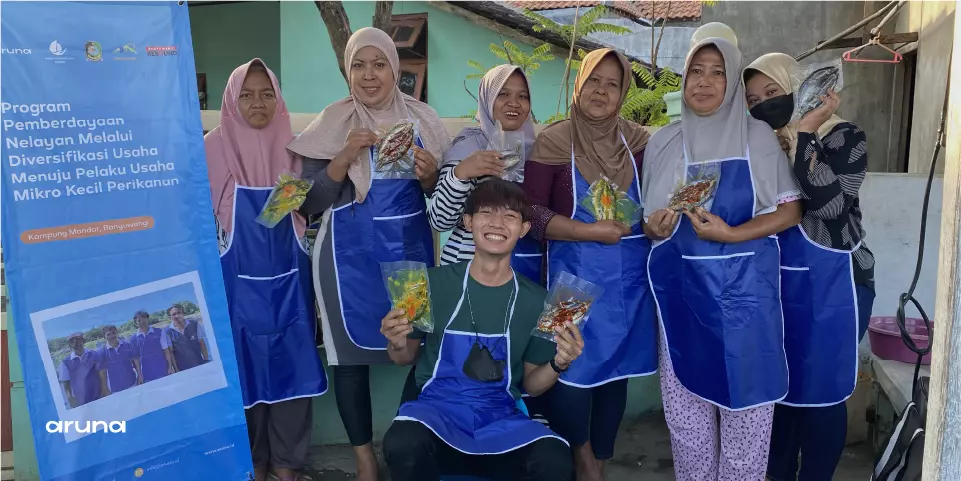
Aruna has educated coastal residents, particularly women, on producing derivative products from leftover catches or aquaculture activities. These products are then aided in marketing to reach potential consumers such as restaurants, hotels, and seafood suppliers across various regions and even internationally. Hence, the reality of numerous coastal areas in Indonesia lacking fisheries extension personnel is concerning. It is hoped that the government collaborates with academia and the private sector to swiftly address this human resource shortage issue.
Prioritize Quality Control to Advance the Fisheries Main Industry
The government of the Republic of Indonesia has chosen the blue economy roadmap as a long-term development goal. Of course, every government agency is starting to move to support the success of implementing the blue economy. The concept of the blue economy focuses on the marine sector, which will certainly have a significant impact on the fisheries main industry.
Minister of Maritime Affairs and Fisheries, Sakti Wahyu Trenggono, stated that quality control is still the domain of the Ministry of Maritime Affairs and Fisheries (KKP) to ensure that products from the fisheries and marine industries meet the standards and qualifications that have been determined. To support the large-scale Blue Economy program, KKP has prepared various quality control and supervision measures to maintain the quality of production results from the fisheries main industry. As a supplier of seafood, you can also participate in this program by ensuring that the seafood products you offer meet the quality standards set by KKP.
Quality Control Implementation Must Meet Sustainability Aspects and Advance the Fisheries Main Industry
As a quality control/assurance unit and implementer of measurable fish capture, the Fish Quarantine, Quality Control, and Fishery Product Security Agency (BKIPM), led by Pamuji Lestari, explained that quality assurance is also implemented comprehensively, including in the development of sustainable fisheries in the marine, coastal, and land sectors. Quality control in the fisheries cultivation sector is applied through Good Fish Cultivation Practices (CBIB) and traceability. Of course, quality assurance also applies to fishing vessels and landing ports to encourage an increase in the number of vessels that comply with quality requirements.
Quality assurance is seen as playing an important role in realizing sustainable management and utilization of marine and fisheries resources, “This will have an impact on increasing the income and welfare of fishermen, fish farmers, processors, and marketers, as well as the general public,” he concluded.
Quality Assurance Plays a Role in Ensuring Target Production Results
As a major industry in Indonesia, fisheries are the focus of the BKIPM national coordination meeting held in Sorong. Seafood suppliers must ensure effective quality control to achieve production targets according to quality standards. Quality assurance can help ensure that the quality of fishery products is maintained, meet customer expectations, and improve the industry’s reputation.
The results of the national coordination meeting, which designed quality control and assurance in the fisheries main industry, are certainly eagerly awaited by all marine and fisheries stakeholders, including fishermen, fisheries companies, seafood distributors, and even consumers. By implementing a better quality assurance system, the standard of living of the community will improve, and consumers can get products with good quality assurance.
Sustainable Product Quality Standards are Key for Aruna
Aruna, as a fisheries company that has long applied sustainability insights to advance the standard of living of fishermen and make it easier for consumers to obtain quality fish products at more affordable prices, is also looking forward to the output of the national coordination meeting held in Sorong, even though Aruna has helped fishermen improve their economic standard by creating better quality standards to control capture and cultivation results.
Aruna’s success in implementing sustainable fisheries in various regions in Indonesia cannot be separated from the role of Local Heroes and the Aruna Hub ecosystem because each region certainly has its own local wisdom. Of course, this should be a consideration for KKP to prepare policy socialization on fisheries quality control so that it can be more easily accepted and understood by fisheries actors in all regions.