

Shrimp and Tuna Regain Their Status as Indonesia’s Leading Fishing Export Commodities
Shrimp and tuna regained their status as Indonesia’s leading fishing export commodities in the first six months of 2023. According to a report by the Ministry of Marine Affairs and Fisheries (KKP), the total value of Indonesia’s fishing exports in that period reached around 2.8 billion US dollars, or equivalent to Rp 44 trillion.
The United States, Japan, and China were the main export markets for Indonesian fishing products during this period. The high value of fishing exports is the result of contributions from both the capture fishery and aquaculture sectors.
This time, let’s discuss the conditions of Indonesia’s fishing exports in the first half of 2023 and its potential in the future.
1. Shrimp and Tuna as Main Commodities
Shrimp is the category with the largest value in fishing exports, at 567 million US dollars, or equivalent to Rp 8.9 trillion. There are three types of shrimp that are the main ones, namely vannamei shrimp, windu shrimp, and merguensi shrimp. The main market for Indonesian shrimp is the United States.
In 2022, the United States also became the main export destination for Indonesian shrimp with a market share of 60%. This makes Indonesia the third largest shrimp exporter in the world.
Next, tuna-skipjack-mackerel (TCT) became the second largest export commodity, with an export value of 282 million US dollars, or equivalent to Rp 4.4 trillion. Japan is the main export market for this category, especially tuna, which is the product with the highest demand.
Tuna is very popular in the global market because it has a delicious and nutritious taste. As a source of animal protein, tuna is often used as a main ingredient in popular dishes, such as sushi and sashimi.
2. Diversification and Potential of Fishing Production
Squid-cuttlefish-octopus (CSG) is also one of the fishing export commodities with a high value, at 195 million US dollars, or equivalent to Rp 3 trillion. The main market for CSG is China. In addition to the three categories mentioned, fishing export commodities also include crab, lobster, pearl, seaweed, and other marine products, including processed products.
Director of Marketing of the Directorate General of Strengthening Competitiveness of Marine and Fisheries Products (PDSPKP), Erwin Dwiyana, said that the potential for Indonesian fisheries can reach 12 million tons per year. KKP is optimistic that Indonesia’s rich marine resources can support fishing product export activities.
3. The Future of Indonesia’s Fishing Exports
Indonesia’s fishing exports are expected to continue to grow in the future. This is supported by various government efforts to improve the competitiveness of Indonesian fishing products in the international market.
One of KKP’s efforts to increase fishing product exports is to hold Foreign Buyers Mission (FBM). In this activity, KKP invites potential importers from various countries to see Indonesian fishing products directly. This activity aims to help importers better understand the potential of Indonesian fishing products, thus increasing their export opportunities.
Shrimp and tuna are the most exported Indonesian fishing products. KKP is working to optimize fishing production to meet the 2023 export target of USD 7.66 billion, or equivalent to Rp 116.1 trillion.
Aruna is committed to supporting the increase in Indonesia’s fishing exports. We provide a digital platform that connects fishermen with buyers from various countries so that it helps fishermen reach a wider market. Since 2016 to date, Aruna has been in 31 provinces in Indonesia with more than 40,000 registered Aruna fishermen. In early 2023, Aruna has grown by 62% compared to the previous year.
Direct Call Mechanism Makes Export Time and Cost of Fishery Products More Efficient
Fishery product exports play an important role in the Indonesian economy. According to data from the Ministry of Marine Affairs and Fisheries (KKP), in 2022, the value of fishery product exports from Indonesia was recorded at USD 6.24 billion, an increase of 9.15% from the previous year.
The main export destinations for Indonesian fishery products are dominated by Asian countries, such as Malaysia, Singapore, Japan, Hong Kong, and China. In addition, fishery product exports are also made to the United States, Australia, and various other countries.
Up to now, air transportation has been a popular choice for shipping fishery products. However, the need for transit flights has been a barrier to air transportation of fishery products. The government is working to overcome this barrier by opening access to “Direct Call” flights.
1. Direct Call as an Export Efficiency Effort
Direct call flights are direct flights from one airport to another without transit. Previously, cargo flights from Indonesia to export destinations had to transit in Jakarta. However, at present, cargo shipments to the destination can be made directly from the city of origin, such as on the routes Manado-Tokyo, Ambon-Sydney, and Makassar-Hong Kong. Exporting fishery products through direct call flights has three advantages, namely:
- Shorter shipping time Fishery products from Indonesia can be sent directly to the destination country, so the shipping time is shorter.
- Cheaper costs The cost of shipping through direct call is generally cheaper than shipping through transit. In addition, there are no additional costs for temporary product storage.
- Better product quality Fishery products do not need to undergo a transit process that can reduce their quality.
2. Maintaining the Quality of Fishery Export Products
Exported fishery products must be guaranteed in terms of quality and safety. In this regard, the Indonesian Central Fisheries Quarantine and Quality Control Agency (BKIPM) plays a role in ensuring this. BKIPM carries out fish quarantine checks and quality testing to ensure that exported fishery products meet the established quality standards.
The Head of BKIPM Makassar, Siti Chadidjah, emphasized that BKIPM will always support efforts to ensure the quality and safety of fishery products. This aims to increase export opportunities, product selling prices, and consumer confidence in Indonesian fishery products.
3. Government Support for Fishery Product Exports
The KKP, together with the provincial and district governments, collaborate to ensure the success of fishery product exports. This collaboration is carried out to improve the efficiency and effectiveness of exports, as well as to improve the competitiveness of fishery products in the global market.
As stated by the Minister of Marine Affairs and Fisheries, Sakti Wahyu Trenggono, the KKP will provide support to fishery businesses. This support includes mentoring, certification, market potential analysis, and assurance of the quality and safety of fishery products.
Direct call flights are a positive step to increase fishery product exports. This mechanism is expected to reduce export costs and time, so that Indonesian fishery products can reach international markets more quickly and easily.
Aruna, as a fishery company committed to sustainable fisheries, also supports the increase in fishery product exports. We help fishermen to reach a wider market, both domestically and internationally.
You can also support the export of fishery products by consuming more local seafood. This will increase the demand for Indonesian fishery products and create greater export opportunities for the fisheries sector. With joint efforts, Indonesia can become the world’s largest producer of fishery products.
Aruna Zero Waste: Transforming Fishery Waste for a Sustainable Marine Ecosystem
The fisheries industry is a vital sector for Indonesia, but its massive production scale poses challenges in waste management. Fishery waste, comprising heads, bones, skins, fins, scales, and entrails, is estimated to account for 30-40% of the total weight of fishery products.
Improperly managed fishery waste can have negative environmental impacts, including pollution and damage to marine ecosystems. To address this issue, the Ministry of Maritime Affairs and Fisheries (MMAF) encourages all stakeholders to embrace a zero-waste approach in the fisheries industry. What is the concept of zero waste in fishery products, and how is Aruna working to implement it?
Zero Waste in Fishery Products
The concept of zero waste in fisheries involves utilizing every part of the fish and minimizing waste. Budi Sulistiyo, Director General for Strengthening the Competitiveness of Marine and Fisheries Products, highlights that every component of a fish can be turned into an economically valuable products.
For example, in the application of zero waste to fish, fish meat can be processed into fillets, steaks, and loins. Meanwhile, fish bones and heads can be transformed into snacks, pharmaceutical ingredients, and industrial materials. Additionally, fish entrails can be used to produce livestock feed.
Trisna Ningsih, Head of the Central Testing Institute for the Application of Marine and Fisheries Products, explains that the value of fishery products can be enhanced through processing. Raw fish has a low value due to its perishable nature. However, processing fish into processed foods, health supplements, cosmetics, pharmaceuticals, and animal feed can increase its value.
Zero Waste as Part of Sustainable Fisheries
The application of zero waste in fishery products is a form of sustainable fishing practice, consisting of three principles:
1. Selective fishing, using environmentally friendly methods and gear while avoiding overfishing.
2. Efficient fish processing, involving the utilization of every part of the fish.
3. Creative waste utilization, transforming waste into useful and value-added products.
By implementing these principles, the amount of fishery waste ending up as trash is reduced, supporting the sustainability of marine ecosystems.
Aruna Zero Waste Hub
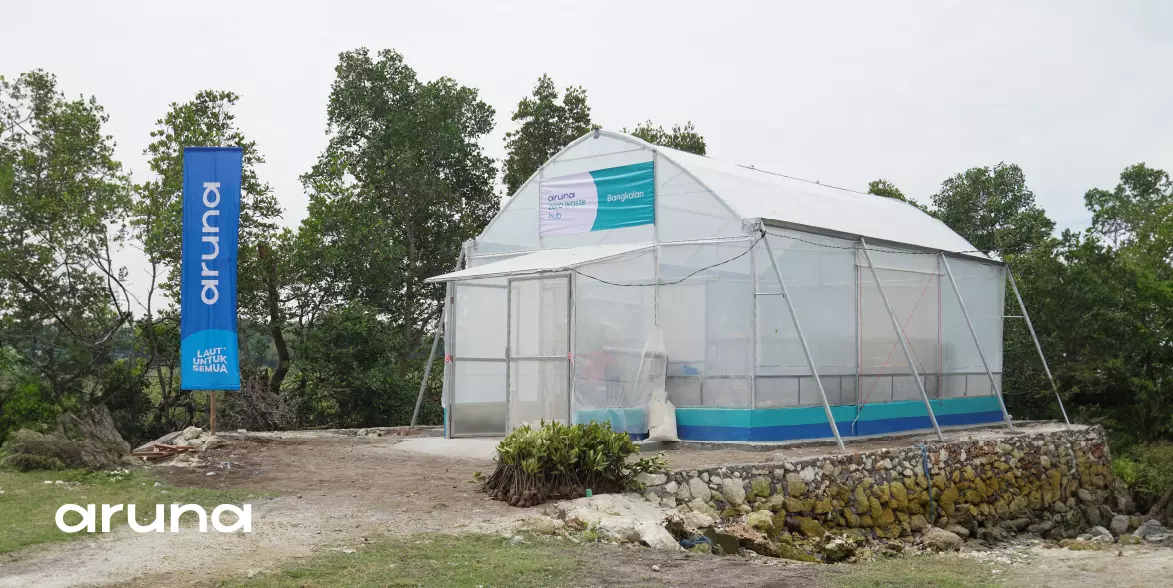
As a fisheries company committed to environmental sustainability, Aruna also adopts zero waste management. The Aruna Zero Waste Hub is established to reduce, or even eliminate, fishery production waste.
One of our hubs in Bangkalan, East Java, has a drying facility to process crab shells into fish feed. Activities at the Aruna Zero Waste Hub involve coastal communities guided by Aruna’s Local Heroes. The goal is to minimize waste and diversify products.
Jerry Sambuaga, Deputy Minister of Trade, states that Aruna’s zero waste program is part of the effort to achieve Sustainable Development Goals (SDGs) related to Sustainable Cities and Communities. Through the Aruna Zero Waste Hub, we support MMAF’s initiative to implement zero waste in fishery products. Additionally, we conduct education and awareness campaigns on utilizing fishery waste to support sustainable fisheries.
As consumers, you can contribute to this zero-waste program by choosing fishery products from sustainable sources and utilizing every part of the product. For instance, turning fish heads into delicious dishes, consuming shrimp with their heads and shells, and cooking squid with its ink.
The implementation of zero waste in fishery products can bring widespread benefits to the environment, economy, and society, representing a crucial step toward realizing a sustainable future for our oceans.