

Wow, Overfishing Reduced Fish by Almost 90%?
Overfishing is a serious threat to the sustainability of fish resources and marine ecosystems. In recent decades, the number of fish caught has exceeded their natural population levels, resulting in a decline in fish stocks worldwide.
In Indonesia, this phenomenon is increasingly worrying. According to the results of the research “Trends in Marine Resources and Fisheries Management in Indonesia in 2022” conducted by the World Research Institute, it was found that more than 50% of the wild fish population in Indonesia experienced overfishing. This not only impacts the current generation, but also future generations.
If not handled properly, it is estimated that by 2050, the food fish population will collapse. This means that future generations will have difficulty getting fish as a food source.
1. Reason Overfishing
Factors that can cause overfishing are:
Use of fishing gear that is not environmentally friendly.
Fishing gear that is not environmentally friendly can catch fish non-selectively, including non-target species (bycatch) and small-sized species.Excessive and out-of-season fishing.
Excessive fishing can result in a drastic decline in fish populations. Meanwhile, fishing outside the season can disrupt the spawning and growth of fish.Unprotected fishing areas.
Unprotected areas are vulnerable to irresponsible fishing practices because there is no control over fishing.
2. Impact Overfishing
Impact overfishing consumption of fish species is very large. If this continues, fish populations could decline by up to 90%. This will result in disruption of the balance of the food chain in the marine ecosystem. Fishermen’s catches will also decrease, so fishermen’s income will decrease.
In the long run, overfishing have an impact on future generations. One impact is the loss of fish protein sources, which has a negative impact on children’s health and nutrition. Fish is an affordable and easy to obtain source of protein, so it is very important for children to grow and develop optimally.
Not only that, overfishing also impacts the marine ecosystem as a whole. Damage to coral reefs due to overfishing can reduce marine biodiversity and loss of habitat for marine species.
3. Aruna’s Efforts to Prevent Overfishing
As a fishing company that cares about the sustainability of marine resources, Aruna plays an active role in preventing overfishing. We use environmentally friendly fishing gear, such as traps, hand lines, longlines, lift nets and gill nets to reduce negative impacts on the marine ecosystem.
Apart from that, Aruna also supports the Measurable Fishing policy initiated by the Ministry of Maritime Affairs and Fisheries (KKP). We try to comply with the rules that have been stated in the Measured Fishing (PIT) policy so that the fish population is maintained.
In order to support small-scale fisheries, we empower local fishermen by providing training and mentoring assistance. This is done to improve the skills and productivity of fishermen, so that fishermen can obtain higher quality catches.
Overfishing is a serious problem that must be addressed immediately. We invite the entire community to play a role by choosing fishery products from companies that implement sustainable fishery practices. In this way, we can protect marine resources for a better future.
Let’s work together to preserve fish resources and marine ecosystems so that future generations can still enjoy delicious and nutritious fish.
Aruna Zero Waste: Transforming Fishery Waste for a Sustainable Marine Ecosystem
The fisheries industry is a vital sector for Indonesia, but its massive production scale poses challenges in waste management. Fishery waste, comprising heads, bones, skins, fins, scales, and entrails, is estimated to account for 30-40% of the total weight of fishery products.
Improperly managed fishery waste can have negative environmental impacts, including pollution and damage to marine ecosystems. To address this issue, the Ministry of Maritime Affairs and Fisheries (MMAF) encourages all stakeholders to embrace a zero-waste approach in the fisheries industry. What is the concept of zero waste in fishery products, and how is Aruna working to implement it?
Zero Waste in Fishery Products
The concept of zero waste in fisheries involves utilizing every part of the fish and minimizing waste. Budi Sulistiyo, Director General for Strengthening the Competitiveness of Marine and Fisheries Products, highlights that every component of a fish can be turned into an economically valuable products.
For example, in the application of zero waste to fish, fish meat can be processed into fillets, steaks, and loins. Meanwhile, fish bones and heads can be transformed into snacks, pharmaceutical ingredients, and industrial materials. Additionally, fish entrails can be used to produce livestock feed.
Trisna Ningsih, Head of the Central Testing Institute for the Application of Marine and Fisheries Products, explains that the value of fishery products can be enhanced through processing. Raw fish has a low value due to its perishable nature. However, processing fish into processed foods, health supplements, cosmetics, pharmaceuticals, and animal feed can increase its value.
Zero Waste as Part of Sustainable Fisheries
The application of zero waste in fishery products is a form of sustainable fishing practice, consisting of three principles:
1. Selective fishing, using environmentally friendly methods and gear while avoiding overfishing.
2. Efficient fish processing, involving the utilization of every part of the fish.
3. Creative waste utilization, transforming waste into useful and value-added products.
By implementing these principles, the amount of fishery waste ending up as trash is reduced, supporting the sustainability of marine ecosystems.
Aruna Zero Waste Hub
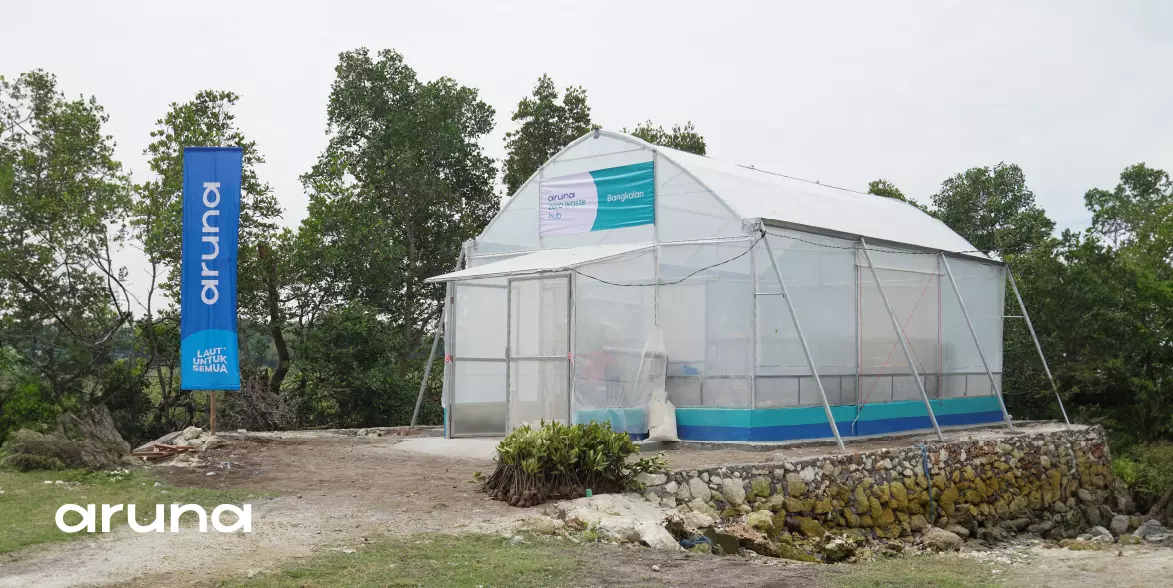
As a fisheries company committed to environmental sustainability, Aruna also adopts zero waste management. The Aruna Zero Waste Hub is established to reduce, or even eliminate, fishery production waste.
One of our hubs in Bangkalan, East Java, has a drying facility to process crab shells into fish feed. Activities at the Aruna Zero Waste Hub involve coastal communities guided by Aruna’s Local Heroes. The goal is to minimize waste and diversify products.
Jerry Sambuaga, Deputy Minister of Trade, states that Aruna’s zero waste program is part of the effort to achieve Sustainable Development Goals (SDGs) related to Sustainable Cities and Communities. Through the Aruna Zero Waste Hub, we support MMAF’s initiative to implement zero waste in fishery products. Additionally, we conduct education and awareness campaigns on utilizing fishery waste to support sustainable fisheries.
As consumers, you can contribute to this zero-waste program by choosing fishery products from sustainable sources and utilizing every part of the product. For instance, turning fish heads into delicious dishes, consuming shrimp with their heads and shells, and cooking squid with its ink.
The implementation of zero waste in fishery products can bring widespread benefits to the environment, economy, and society, representing a crucial step toward realizing a sustainable future for our oceans.